
Indiana University Athletics
Aird Seeks To Put Hoosiers To the Volleyball Test
8/23/2019 9:53:00 AM | Women's Volleyball
BY PETE DIPRIMIO
IUHoosiers.com
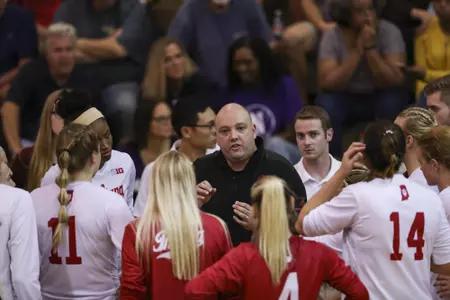
BLOOMINGTON, Ind. -- Steve Aird has heard the talk. Heck, he's coached to it.
Indiana as volleyball patsy is a rep whose time is over, except not everyone knows it.
Aird's mission -- shatter that perception.
The second-year coach plans to do it, not with word, but by deed. Until then, he'll turn a negative into a positive.
"I've done this long enough to know that everybody in the Big Ten looks at Indiana as a win," he says. "That's the mentality I'm taking. Until that changes and we become a program that consistently puts out a good product, we'll keep grinding."
Grinding will have to buck history.
IU has had just two winning records in the last eight seasons. It hasn't had a winning Big Ten record since going 11-9 in 1999. Its last non-losing conference record came in 2002 at 10-10.
This reflects Big Ten excellence -- the conference rates as perhaps the nation's best with perennial powers Penn State, Nebraska, Illinois, Minnesota and Wisconsin -- as much as Hoosier struggles.
Since 1987, eight Big Ten teams have made 32 Final Four appearances. Penn State has won seven national titles in that span. Nebraska has won five, two since joining the Big Ten in 2011. Minnesota, Illinois and Wisconsin have reached the national title game.
Last season, Nebraska finished second nationally to Stanford.
How does Indiana compete against this kind of firepower?
It starts with recruiting.
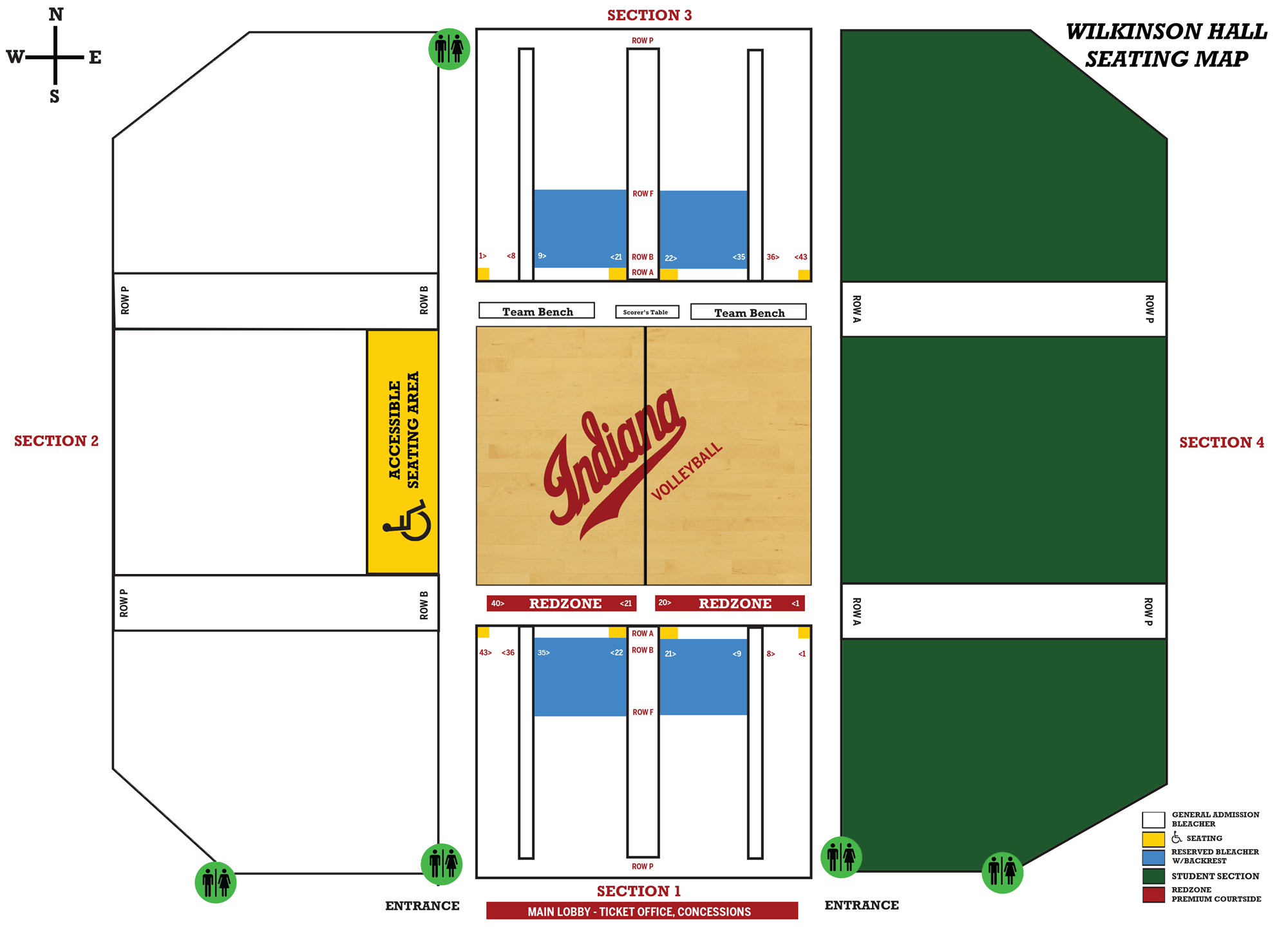
Having Wilkinson Hall gives Aird a state-of-the-art facility that rates among the nation's best, something previous IU coaches didn't have.
"It will help tremendously as we move forward," Aird says.
Beyond that, Hoosier coaches must aggressively -- and within the rules -- go after the nation's best players. It helps that the state of Indiana rates in the top-five nationally in producing elite talent.
Recruiting begins early.
"The culture of women's volleyball is that you recruit seventh and eighth grade kids," Aird says.
Yes, you read that right. College coaches recruit middle school players.
"The NCAA just changed the legislation," Aird says, "so we're letting the top seventh and eighth-grade kids know who we are and that we want them to be here."
If you think that's too young, you're not alone.
"You can look at it two ways," Aird says. "One is that it's ridiculous, but that's like the typewriter repair guy laughing at the computer or the taxi driver laughing at the Uber or Lyft. The market sets what you have to do as a coach.
"They've pushed back legislation so official visits can't happen until the junior year, but everyone in the country knows who the good young kids are."
Aird also sharpens IU's Big Ten prime-time readiness with a far more rigorous non-conference schedule than what it previously played. Coming this season are programs such as Oregon State, Oklahoma and national contender Kentucky.
The goal is to eliminate scenarios such as in 2017, when the Hoosiers went 11-1 in non-conference action and 1-19 in Big Ten play.
In fact, IU has gone 1-19 in conference games after posing winning non-conference records three times in the last eight seasons.
No more, Aird says.
"At some point the program has to make the decision that hoping to win isn't a strategy. Hope isn't a strategy. Winning a bunch of matches in the non-conference and pretending you've arrived as a program and then get lucky in the Big Ten season is not the way I want to go about it.
"The only way to do it is to test yourself. You tell recruits and the kids in your program that we're going to play the best in the country all the time. The only way we'll get to the postseason is to be good and have a lot of dedicated athlete.
"Good programs don't look at it like let's sneak in the backdoor. It's play good people and get good."
Building a Big Ten winner, Aird says, requires patience, resolve and commitment. Athletic director Fred Glass has invested hundreds of millions of dollars in athletic facilities over the last decade. Wilkinson Hall is part of that. It's designed to help volleyball and wrestling.
"Every part of the program has to be serious in its approach," Aird says. "You need to have great players. It's funny how you're a great coach when you have great players.
"All of the spokes of the program, from strength and conditioning to nutrition to academics have to be in lock step with what we're trying to do.
"You need full support from the administration. I feel blessed here. Fred has been unreal. I feel lucky that he's leading us. The people under him do a great job.
"And then there's time. That's the big one. This is baking, not microwaving. You can have one good year and be a flash in the pan and be irrelevant the next year. If you want to be consistently good, there are few ways to go about it. It's a grind and has to be done the right way every time."
Ultimately, he says, it comes down to having the right people.
"I want Every Dayers around me. People who wake up and try to figure out how to make this better every day. The more people I get around me like that, the better the chance we have for this success to be sustainable"
IUHoosiers.com
BLOOMINGTON, Ind. -- Steve Aird has heard the talk. Heck, he's coached to it.
Indiana as volleyball patsy is a rep whose time is over, except not everyone knows it.
Aird's mission -- shatter that perception.
The second-year coach plans to do it, not with word, but by deed. Until then, he'll turn a negative into a positive.
"I've done this long enough to know that everybody in the Big Ten looks at Indiana as a win," he says. "That's the mentality I'm taking. Until that changes and we become a program that consistently puts out a good product, we'll keep grinding."
Grinding will have to buck history.
IU has had just two winning records in the last eight seasons. It hasn't had a winning Big Ten record since going 11-9 in 1999. Its last non-losing conference record came in 2002 at 10-10.
This reflects Big Ten excellence -- the conference rates as perhaps the nation's best with perennial powers Penn State, Nebraska, Illinois, Minnesota and Wisconsin -- as much as Hoosier struggles.
Since 1987, eight Big Ten teams have made 32 Final Four appearances. Penn State has won seven national titles in that span. Nebraska has won five, two since joining the Big Ten in 2011. Minnesota, Illinois and Wisconsin have reached the national title game.
Last season, Nebraska finished second nationally to Stanford.
How does Indiana compete against this kind of firepower?
It starts with recruiting.
Having Wilkinson Hall gives Aird a state-of-the-art facility that rates among the nation's best, something previous IU coaches didn't have.
"It will help tremendously as we move forward," Aird says.
Beyond that, Hoosier coaches must aggressively -- and within the rules -- go after the nation's best players. It helps that the state of Indiana rates in the top-five nationally in producing elite talent.
Recruiting begins early.
"The culture of women's volleyball is that you recruit seventh and eighth grade kids," Aird says.
Yes, you read that right. College coaches recruit middle school players.
"The NCAA just changed the legislation," Aird says, "so we're letting the top seventh and eighth-grade kids know who we are and that we want them to be here."
If you think that's too young, you're not alone.
"You can look at it two ways," Aird says. "One is that it's ridiculous, but that's like the typewriter repair guy laughing at the computer or the taxi driver laughing at the Uber or Lyft. The market sets what you have to do as a coach.
"They've pushed back legislation so official visits can't happen until the junior year, but everyone in the country knows who the good young kids are."
Aird also sharpens IU's Big Ten prime-time readiness with a far more rigorous non-conference schedule than what it previously played. Coming this season are programs such as Oregon State, Oklahoma and national contender Kentucky.
The goal is to eliminate scenarios such as in 2017, when the Hoosiers went 11-1 in non-conference action and 1-19 in Big Ten play.
In fact, IU has gone 1-19 in conference games after posing winning non-conference records three times in the last eight seasons.
No more, Aird says.
"At some point the program has to make the decision that hoping to win isn't a strategy. Hope isn't a strategy. Winning a bunch of matches in the non-conference and pretending you've arrived as a program and then get lucky in the Big Ten season is not the way I want to go about it.
"The only way to do it is to test yourself. You tell recruits and the kids in your program that we're going to play the best in the country all the time. The only way we'll get to the postseason is to be good and have a lot of dedicated athlete.
"Good programs don't look at it like let's sneak in the backdoor. It's play good people and get good."
Building a Big Ten winner, Aird says, requires patience, resolve and commitment. Athletic director Fred Glass has invested hundreds of millions of dollars in athletic facilities over the last decade. Wilkinson Hall is part of that. It's designed to help volleyball and wrestling.
"Every part of the program has to be serious in its approach," Aird says. "You need to have great players. It's funny how you're a great coach when you have great players.
"All of the spokes of the program, from strength and conditioning to nutrition to academics have to be in lock step with what we're trying to do.
"You need full support from the administration. I feel blessed here. Fred has been unreal. I feel lucky that he's leading us. The people under him do a great job.
"And then there's time. That's the big one. This is baking, not microwaving. You can have one good year and be a flash in the pan and be irrelevant the next year. If you want to be consistently good, there are few ways to go about it. It's a grind and has to be done the right way every time."
Ultimately, he says, it comes down to having the right people.
"I want Every Dayers around me. People who wake up and try to figure out how to make this better every day. The more people I get around me like that, the better the chance we have for this success to be sustainable"

Wednesday, August 05
Monday, August 03
Monday, August 03
Monday, August 03