
Indiana University Athletics
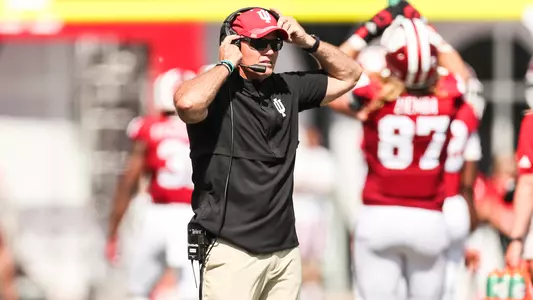
Tom Allen Zoom Press Conference Transcript & Video
6/3/2020 1:04:00 PM | Football
Head Coach Tom Allen
Opening statement…
ALLEN: Good morning everyone. Appreciate you joining us for this press conference. I just really appreciate all you guys continue to do supporting all the things that go into each and every day. A lot of things going on in our country right now, which obviously equates to a lot of things going on in the lives of our players. Continue to have heavy hearts for Chris Beaty and his family with the loss of our special former player. Just want to continue to support them in every way possible. That will not stop. Just appreciate everything he stood for and represented and I think it's obvious that he's been honored and continued to be honored by the city of Indianapolis and those that knew him and loved him and what he meant to everybody that was a part of his life. We want to continue to think about them. Also, in regards to our players and everything they're going through right now and in our country, continue to listen and support. That's my biggest focus at this stage of what's going on. As an entire staff, continue to have open dialogue with our guys and just be able to be there for them and to help them through this process of learning how to properly stand up for what you believe in to be able to do it in the right way. I think our guys are responding and having some good communications for sure with all of us as coaches. That's very, very important at this time. As we know the statement has been put out about our return to campus. That's a very important part of this time this morning. The restart plan has been posted and everybody has access to a very, very thorough. Very encouraged by the work that has been done. Feel very, very good about the medical professionals, and our staff here at Indiana has done a tremendous job of complying with the NCAA standards and the Big Ten standards and the national health standards that we have in place. We use those guidelines and have met all those and exceeded those in a quest to create a healthy and safe environment for our players to be able to come back to campus. We are going to begin this process on Monday. Monday, the 8th of June will be a travel day for our players. They will be coming back in three different waves. In the first group we will be having 68 players come back and then in the second group we will have 25 players and then in the third wave we will have the additional guys that based on different circumstances and who hasn't joined us yet that's previously been on the team will be joining us. Those will be in two-week increments. So the 15th, 29th and July 6 will be the start date for each of those three groups to be in the weight room. There's a process we have to go through and we'll kind of take you through all that right now. For the first phase that's coming into the first wave that's coming in here on June 8. Once they get here and travel on the 8th then on the 9th, they will be tested in two different groups on that day. Half the group will be tested on Tuesday. Half the group will be tested on Wednesday. The 9th and the 10th will be testing days for our players. I will be able to have them divided up and tested for COVID-19 and our staff will actually be tested on the 8th as well. All those will be in contact with them. They'll be tested. It'll be a two- to three-day period where they're going to be quarantined after they are tested before we find out the results and those results will be notified and we'll go ahead and move forward from there. Basically, step one is to get that done. Once they are cleared, then they'll be orientated into all of the policies and procedures that we have in place to help them be successful in the weight room and during their running on the athletic fields. Those are really the two areas that we'll be utilizing during this set time that they come to campus. So it's very, very controlled. Very organized. Very planned and a lot has gone into that. Feel very, very confident in our plan. Appreciate Fred Glass and Scott Dolson and their leadership to be able to have the entire group prepared and very, very thorough. There are so many people involved with this. We've had so many different meetings and just makes you feel good about the high level of preparation that's gone into doing what's best for our student-athletes and keeping them safe. Also encouraged by the closure of our spring semester academically. Had a team GPA of 3.285. Just really proud of our academic support staff. Dustin and Christa do a tremendous job and all those that work with them. Just really appreciate all the hard work. Very, very challenging to be able to finish up school in all different parts of the country and give them all the resources they needed to be able to be successful in the classroom. Very, very proud of our academic support staff for the job they did. Our players just finishing the course not blinking when these things were thrown at them. Also just wanted to announce Dylan Powell has been given his sixth year of eligibility. He will have two years with us here, which is very exciting for us and for him. Very much encouraged by that. He's been a tremendous leader since he's been here and has worked extremely hard. That's a positive for our program. Kham Taylor has also joined us officially as a grad transfer tight end to give us some more depth at that position. Also really excited for Simon Stepaniak who officially signed his contract with the Green Bay Packers. Great day for him and great opportunity that he has there. I know he'll go there and do a tremendous job for that organization. That covers the introduction that I have for you guys, so we'll take questions at this time.
Q: On being able to have personal contact with players again…
ALLEN: There is no question. I can't wait to see them. It's been so long. Seems like it. It really has. I'd love to give them a big ole bear hug. Probably going to have to give them either a fist bump or an elbow bump or whatever the protocol is for that. Just to be able to see them face-to-face it's such a huge part of who we are here. The relationships that we have with our guys, I love being around them. I love to spend time with them. Definitely missed that for sure. Not getting them all back, but we're getting a big group of them back travelling on Monday. We'll see them on Tuesday. Won't have a lot of interaction with them. We're not going to have meetings with them. All those meetings will continue to be via Zoom and all those types of things. Regardless, just being able to be around them, that's going to be very important. I think it's important for them. I think it's going to be huge in their mentality of being able to stay with their minds right. You can only be away for so long. I think it's gotten to that point where it's really important we get them back. Obviously, we had to follow the protocols that were set by those above us. Very much excited, encouraged to get our guys back here and spend some time with them.
Q: On the players being able to feel comfortable to talk about what is going on in the world…
ALLEN: The dialogue is continuous with our guys. Really as a staff, we talked about this again. They're in constant communication with their guys in their position room. They're in constant communication with their guys overall. I just want them to know that we're here for them. That we'll listen. I want to know what they're feeling, I want to know what's going on the inside of their mind. Sometimes you can tell when a guy's not right, but it's harder when you're apart. You have to be able to rely on that previously built relationship to just to know your guys well enough to know when something's not the way it needs to be. Listening and supporting them right now is very important. Also, we're in the process as we continue these conversations about the next step for us. We want to be able to have that next step of dialogue with our players and law enforcement. I think that is a very important part of all this. To be able to sit down and talk man-to-man and voice concerns and things that they feel and things that's going on in their heads and be able to have an open forum. To be able to have that safe space. Can't do that in person right now. Wish we could. I think it'd be ideal. Just in the format that we've been able to use for team meetings and opportunities like that. So working toward and want to get set up with our guys. I think it's a very tumultuous time in our country. I think right now the best for us is to know them the best and to be able to have that first-level conversation within our team right now with our coaching staff.
Q: On framing a message that will help your team grow from all of this…
ALLEN: You think about what's happened these last few months. It's been hard. I don't think you realize how hard it really is maybe until you take a step back and let some of these things pass. When you're in it, you're just fighting those battles as they come and you're just mustering the energy. It's probably just more of the emotional drain that it has on you that you don't always realize how taxing that can be. I mean you got to be there for your guys. When things go wrong, when adversity hits and we talk about this all the time. It's not if, it's when. We talk about this all the time. Nobody could predict these kinds of things are going to happen and happen in succession. Those serious, heavy things happening one after the next. That's why you have to live your life with core values and core principles. There's anchors in your life. Something we talk about all the time that when these storms come, not if they come, you have a rock-solid foundation that cannot be shaken. The thing about young people, they're forming that foundation and we're helping them establish that foundation. Some kids have a stronger one than others. Some are more fragile than others. We as coaches and myself as a leader, we have to get those young men where their foundation isn't as strong, we got to be a part of that stabilizing structure and have the wisdom to know what that looks like. What you need to say and not say. What they need and what you can provide. That's why there's so many guys in our program. Mike Pechac's role has been huge through all of this. John Powell's role. The guys that are player development guys and character development coaches. It's really helping these guys through the tough parts of life and on and on and on, and our sport psychologists we're utilizing. Just to be able to help them, but to me it's about you talk about your daily habits what you become and how you fall back on those habits when things get tough and you rely on those. For me it's my faith and the principles of scripture that I live my life by and I use it as an anchor for me to help guide them and I don't say 'Hey, this how you have to do it'. But I also know that is how I respond to certain things and to give them that, that's stability. So they kind of have to start shaping and forming themselves and those that have different areas of faith that they rely on, we really help them and support them in that area. Those that don't have them, we try to find a way to create some that they have. The faith is something that you trust. It's bigger than you because if it's just about you, the weight becomes too heavy. When you have the whole pandemic is just a whole issue big enough in itself. Then you have loss within our football family, Cam's family. Now with Chris and all this going on with the country. Some really heavy things that are real life. It makes football seem pretty trivial compared to some of these things for sure. Even with the pandemic, you're talking about so many lives that have been lost. Football has kind of been a big topic because talking about when we're going to play again. You know what there are a lot more important things right now than that. We still have to move forward with that. It can't be something that we don't make a priority. It's just balancing all those things and just helping our guys with how to handle the difficulties that life's going to throw at them. I guess the answer to your question is that's why LEO to me is such a big deal. It's what I believed in my whole coaching career. I brought it here and I believe in it and stand by it because it's about life and it's just transferrable to the field type of great football theme I believe in. That's what we're trying to do here. We want to do both. I think you can do both. It's a great football team that has a high level of success on game day and a team that can build these young men for life. To me, that's what my ultimate responsibility is. That's what I believe I'll be judged for as a coach one day. It's not for the wins and losses, but it's for the character of the men we developed. You excite each one of them and the leadership qualities we can develop into each side of them. That gives us a great opportunity during these challenging times to really maximize the core value of our program and help it be at the forefront.
Q: On how players are going to be divided up into groups during workouts…
ALLEN: There is a very detailed plan for that. Our weight room is very, very large, which is a huge plus at this point. The whole idea is you're going to have groups of 10. That's how they're going to be training in those segments. Our weight room is large enough we can have the east and west side of the weight room to where you have 10 on each side. Now that would include strength coach. You would have nine players and a strength coach. You would have one group of 10 and nine players and a strength coach and another group of 10. When you get on the football fields and practice areas it's the same thing all divided up, spaced out evenly in groups of 10. The north end zone, the south end zone, the beach. Use two full fields, four complete groups going there divided up evenly to where there is really no interaction with guys and they're socially distanced properly and will not be in contact with each other. Very, very organized plan for that and basically there's a rotational basis and that schedule is based on classes meeting. They have summer school classes going on right now. All online but still, there's a lot of responsibility with that. Also organized just based on roommates. The whole idea is that you want to have guys that are together when they leave here, to be together when they workout as best as possible. We put those roommates in the same groups and also tried to strategically have good spacing. We don't have all the same position lifting at the same time. So for instance, if you did have somebody that gets the virus, it doesn't spread to the entire room. It doesn't get affected by it. There's a lot of work that's gone into this in terms of coordinating the schedule and the groups themselves. Every two weeks we add more players. Every two weeks we will also increase the size. There's a lot of things we don't know. This first two-week period will basically give us a lot of good feedback, a lot of good information. We'll be able to use that to help us get to phase two or the second group that comes in even better and make sure we're doing it the right way. If anything we learned we can make better from the first two weeks, we'll do that as we add more players to those groups. Following the protocols and guidelines that are set up. We feel good about that, but that's how it's organized.
Q: On how you are approaching this season's expectations with this group of guys…
ALLEN: I would say first of all, there's so many things going on right now that are outside of football. I think it's kind of a manageable unit type mindset, so you're trying to focus on things in a manageable mindset way. For me it's like okay, let's get our team back together and let's start getting better. Let's start making sure we're taking the next step as a program and to me the focus is on us physically getting ourselves in the kind of condition that we need to be in to be able to have the season we want to have. It's another process-driven approach. We're not going to shy away from expectations. We're excited about the season. Things are a lot different now than they were a few months ago. We thought progressing in this process for this summer and this summer is going to look different than any summer I've ever been a part of in my coaching career. I think with all that being said is all the more reason to focus on the things we can control. I can answer questions about the season and this and that. That's really irrelevant right now because we're going to focus on what we know. What we know is we're ready for our players to come back on June 8. That's the date of travel and they're going to be with us on the 9th and the 10th to get tested and get them ready to lift on the 15th. That's the focus. That's the mindset right now. There's no question we have a lot of players back on this football team from last year that have played football at a high level. I expect our football team to be ready to play their best football early because we're going to have to. We play the Wisconsin Badgers in game number one. That's the focus and that's what we're going to be getting ready for.
Q: On how much time you need to be ready for the season…
ALLEN: There's a lot of unknowns what it's going to look like in July. No one has the answer to that. They're proposing different models for how do you get your team ready. I think there's a six-week plan that has been proposed. Actually came from the Big Ten and some coaches that have spent time in the NFL. It has a little bit of a feel of that. Maybe some compression of the OTA mindset of how you get a team ready to perform at the highest level. Getting them back physically in June is probably sooner than some thought. A month ago that was probably not as likely as it became in the last few weeks. That's a positive thing for sure. I think we all agree that six weeks is probably the standard barrier to be able to physically and mentally be prepared to play in a game. That six-week model hasn't been put out there yet in every little detail, but the bottom line is a gradual progression to walk-throughs for a couple of weeks to fall camp mindset for a couple of weeks. Then a week of continuous fall camp then you have your game week prep before you play your week one opponent. To answer your question, probably say a six-week period. That's kind of what we've agreed on as a coaching fraternity. Everybody wants more than that if you can get more than that. Obviously, the month of June is not a normal June that we've had in the past. It remains to be seen what July will look like. No one knows yet. If it's a normal July, then it will speed that process up. If it's not, then we'll have to make some modifications.
Q: On measurables of football shape with your players…
ALLEN: That's the part that's very unique and very challenging. It's really trusting them even with their weight. There's no question there's constant communications about that. Some guys trying to gain good weight, some guys still trying to lose bad weight differently than would be going on if we were still together. You have to trust them. There's no question we have very detailed workouts for them to follow that they've done on their own. We have not been able to monitor those in any way officially and so by word of mouth of them just saying I'm continuing to do this. I'm doing the workouts you guys are sending me. I'm lifting this many times. I'm running. You're staying on that all the time. Guys are having to get on the scale and take a picture of the scale now. Whether there's somebody behind with their toe on it or whether there's somebody else on the scale I guess who knows. That's the reality of the world we've been in. Kind of crazy, but it's about trust. It really is. It's like have you created a culture where these guys love each other so much that you're going to trust everybody to do the right thing because this team is counting on them. These coaches are counting on them to do the right thing. I'm not naïve. It's not going to be quite the same as them doing it with us. There's going to be some things we're going to have to make up for when we come back because even if you're training by yourself it's not the same as having the whole room full of guys with the strength staff. That's going to be across the board for the whole country to deal with. The amount of work they put in is on them and we're going to find out here pretty soon who has and who hasn't. ?
Q: On if it was important to him to be one of the first coaches to make a statement…
ALLEN: Well to answer your first question, I was not aware at all about who had or who had not said anything at the time. I really had nothing to do with it. All I was doing was really just following my heart, what I felt was the right thing to do. I witnessed, like all of us, I witnessed something that was horrible on video that I knew was wrong. We all know it was wrong, and so I just felt compelled to, in my heart that; I tell our team all the time you've got to live your life with conviction, and that means you're willing to take a stand for what's right. That to me is really at the core of what I chose to do. I just felt compelled to do so I reached out to Fred Glass and said 'Hey, this is how I'm feeling, and this is what I'd like to do'. I also know I represent the University in something like that, so don't want to be reckless with that, or carless with that. I just wanted to be very purposeful and intentional. I just love our guys. I care about them, I knew they were hurting, I'd been talking to them, I've had interaction with them, I just knew, I knew that there was a lot going on. But anger, just a lot of feelings, some of them didn't know how to handle that part of it. I just felt that I have a tremendous responsibility in this role to mentor and to lead many young men from all different backgrounds, all different races, all different types of upbringings and we talk about that a lot. That's what LEO to me is about. It's about the choice, choosing to love the people around you and accepting the responsibilities that that love brings with it. The good and the bad, the tough and the joyous times, and the tearful times, and so to me that's what it was all about. Our players. With that statement came also reaching out to our guys and talking through all this and even family members reaching out to me. It's just been a very important time for our program, and this is a critical time in our country to be able to stand up for what's right and what you believe the way things should be. That to me was the motive and you just talk about guys. It's about teaching them. How do you handle life, how do you handle difficult situations, how do you do things, how do you utilize that platform you've been given, and still stay within your lane of not trying to act like you've got all the answers? It's not what this is about. It's about loving the people that you represent, that you spend so much time with, that you truly have a strong relationship with and you care about them, you care about them so much that you're going to help them through these difficulties of life and just walk with them. To answer your second question, what's been the message is that they just want us to listen. They just want us to hear how they're feeling and then supporting them, being right there with them. Just lock arm and arm and walk through life together, as hard as it may be and as great as it may be, and right now it's really hard. That's the message I'm getting. Sometimes as coaches you want to have all the answers, we want to say all the right things. Sometimes you just need to shut your mouth and listen. That's what I'm trying to do.
Q: On his thoughts on the one-time transfer rule…
ALLEN: I feel like it was probably wise on their part to table it in lieu of all that's going on. That would've added a really difficult component to certain things that are already complicated the way it is. So that was the reason for that I'm sure. I expect it to be passed around January and it'll be part of the new environment that we're in as coaches. I think that we have to have a read, program in our minds of how we view certain guys that we have on our team or on other people's team when they decide to make that decision to transfer. It'll be a whole different type of thought process in regards of roster management. So I see it happening. I see something you have to have a plan for and we've talked about it extensively. Obviously, you want all your players to stay with you, and come here and fulfill the goals that they had when they said they wanted to be an Indiana Hoosier. But I also realize the fact that that may not be the case for every single guy for a variety of reasons and you don't know what they may be or may not be. I think that when it happens you've got to be able to help. To me it's the same thing. We had a young man that chose to enter the portal during this time period and we had some good conversations about it. My whole thing on all of that is be able to just sit down with me and sit down and lets just talk it through. I'm not trying to twist your arm and make you feel guilty about whatever. I just think it's just healthy, it's good life lessons to just sit down when things aren't going a certain way or you need to make a change for a certain reason, to sit down with me and let's just talk it through. Man to man, face to face and I'll support you. I'm going to love you regardless, try to help you make the best decision. But at the end of the day they have to decide what's best for them and their family. I think it's just part of the new roster management mindset we're going to have to have as a staff, and it's something we have to be ready for.
Q: On how he's going to shift the focus back to football when the fall comes…
ALLEN: Well, it's a good thought that you definitely have to have plans for that. I think young people are pretty resilient. I think they are pretty adaptable. I know our guys are extremely hungry to get back to football. Right now, I know there's a lot of serious things that have made that challenging. But I do think it's, I don't want to call it a distraction, that's not the best word to use, but I do think just some level of normalcy will help, and just getting back into a routine with your teammates. You've got to think, we're a close team now so there's a lot of excitement. I talked to a parent yesterday, the mom was just like 'I just want to get him with you guys again. I know once he's back with you guys everything is going to be okay'. But a lot of fears before that happens. I think that's probably how I would view it. We get these guys back together and get them in a routine and get them back to doing the things we love to do. At the same time, these things aren't going to go away. The COVID-19 situation, we're going to have to deal with it. The issues in our country right now, we're going to have to deal with that. I think when you're together with each other that helps. That's going to help us. We're not isolated, we're all in this, you kind of get with guys and I just think that will help. And I think when the time comes, and the season gets ready to be had, that's why I think is an important part of our process. We just focus on the next step, the next thing that's at hand and we're able to truly move through this process step by step together, and it'll help our guys feel better about all of it, and it'll help our parents feel good about it, and we can move forward together. You can't just, it doesn't just become hey we've got to focus on football and everything else goes away. It doesn't work like that. We've got to have a good plan to help them manage it, but it's about growing up, being an adult. You've got to learn to handle your family, learn to handle your job, all the stuff that happens with your family and your job, and you've got to learn to be able to handle all of that going on at one time. That's part of growing up and we've got to teach them how to do that.
Q: On what he's hoping to see from your team as they get back into the weight room…
ALLEN: Based on the circumstances the biggest difference could be equipment. Some of these guys have been doing push-ups and sit-ups and things in their house this entire time. It's been way longer than maybe some ever thought that they'd have to do, and then just the structure. The other thing you have to think about, which is huge, is they haven't been with our strength staff yet. We announced Coach Wellman to the team the Thursday before we left for spring break, and that was the first time he was introduced. He and his entire staff have not worked with them face to face in a workout yet. That's going to be very different. I'm looking forward to that, that's an exciting time for them and for our strength staff as well. It's just going to be a lot of changes. Just the structure, and the discipline, and the running and everything you do together. You're all doing it together and making sure you are getting the right meals and making sure that everything is being done correctly in your room meetings when you have a chance to see them. I think it's a completely different situation. What I hope to see is that we'll use this time to grow physically, to grow emotionally as we help them through the struggles we're experiencing as a country and also help them mentally get stronger, and almost kind of heal a little bit from all that's been going on. And all the anxiety that the COVID-19 situation creates and the anxiety that this national situation can create, and just all the different things, all the unknowns about the season and all that. Just trying to get our guys health in those three areas and help them continue to move through this. So a lot going on, like I said in the beginning, and that's not going to change.
Q: On the response been from parents and players as they return back…
ALLEN: It's been a pretty thorough process of trying to communicate from the very beginning. In a mass way we use email to get big messages out that everybody needs to hear, to parents. Just try to kind of get the guidelines out and everything else that they know. We've had Zoom meetings with parents, we've had phone calls with parents, open it up to anytime you have any questions at all, feel free to share any concerns that you have. I think because the communication has been good, thorough and consistent I would say, we've had very few, have anybody say 'Hey I don't want my son coming back. I don't feel safe. I don't feel he's going to be safe'. No one has said that or felt that way. Concerns for sure and we've talked them through that and tried to answer as many questions as we can. I can say we just want to educate and inform them and that they feel good about the fact that we're doing everything we can do. You can't say that there's zero risk, you can't say that. There's risk in everything that we do. But you do everything at a high level of preparation and you follow all the medical experts and everything you say is the best practices. Like Andy (Hipskind) just mentioned, you adjust and move forward. I've had some questions that I don't have answers to yet about what July and the start of the season are going to look like. I just think you let them know that these are fluid situations. We're going to continue to communicate so that they feel comfortable. Phone call if they need to, calling the position coach or calling Coach Pechac or Mike Doig, anybody that we have that can help. Our training staff, Kyle does a phenomenal job with communication with our parents. So just communicate over and over so they feel good about it, and then when they have questions, they know they've got easy access to get those questions answered.
Q: On his expectations on Michael Penix Jr. this year…
ALLEN: We've met and sat down with expectations. Step number one was really embracing, as I've told him, being a starter in the Big Ten. What does that look like, what do those expectations look like, and mapping those out for him. At the top of the list is how do you prepare? That's every phase, that's your eating habits, your sleeping habits, that's your film study habits, that's your leadership development. As you grow and become a year older in this program and expectations grow because you are a year older. Obviously, eating healthy is a huge part of that. Gaining good weight. Good body mass. Can you take the hits that are going to be given in this league? So I just think you set those out, you talk him through, then you hold him accountable for the behavior. I've been encouraged by his growth. Encouraged by the process he's going through to be able to put himself in a position to respond to the challenges we've given him for those expectations. What he needs to do to be the leader of this team, the face of the program, which every quarterback has to own that responsibility. Even through time like this. You have to be able to handle yourself in a proper way. I just feel like he's, once again like I've said in many meeting times in the past, the head coach and the starting quarterback are very, very similar. They have to be able to handle the pressures that come with the position. The pats on the back, the criticism, all the same, the good and the bad and be able to manage it all and not let any of those things affect you in a negative way. He's very even keeled in his personality and the way he handles pressure and stress, which is a great thing for him. But just want to see him continue to grow and develop as a leader, and physically mature into this position. Once again, same thing with everybody else. We're going to know here in the very near future how those things have been. They're going to manifest themselves when we get back together, what we're able to do as a team. I'm excited for him, excited for our future with him, and just anxious to get back and get going.
Closing Statement
ALLEN: Just want to thank everybody for joining us today. Appreciate your time and just anxious to get our players back, get back to work and continue to work through the challenges we're facing right now. Have a great rest of your day and LEO.
Chief Medical Officer Andy Hipskind, M.D.
Q: On the logistics of players returning…
HIPSKIND: As Coach Allen alluded to, we've put together a very detailed plan to restart and we're doing this in phases. So, in the initial phase we'll be able to social distance simply by limiting the numbers of people who are working out together, and what we refer to those groups in medical context is cohorts. He (Allen) was mentioning that we would try to get the kids who are roommates to also be in the same workout group. And you keep people in these cohorts to help limit spread if there were to be a positive case, that exposures to other people would be limited because they would live and work out and train within these cohorts. There will be testing as Coach alluded to prior to starting activities. So we will do an entry test, and really what the goal of that, you'll read something every day on testing, I know there's a lot of debate, there's a lot of people that are considered experts in this, they can have a lot of different views on testing. But we will test every athlete before they come back, and the idea is that there's probably a 25-50 percent asymptomatic infection rate. Those are people that actually have the infection but do not have symptoms to warn them that they have it. So, with that asymptomatic rate we want to know that we are not putting anybody into the facility that could be an asymptomatic carrier. We also know that young people, because they seem to get the symptoms in a milder nature than the older population, that of that 25-50 percent asymptomatic carrier range, a majority of that comes from the younger population. So, they'll be tested prior to getting access to the facility, and then once they have access to the facility it'll be controlled by group size, by cohorting, so who you live with, who you work out with, etc. And really the monitoring of that is going to be through the leadership of the strength and conditioning staff and the athletic training staff and our coaches whenever they are able to have contact with them. We will have our athletes and any of our stake holders, anybody involved in working out, they will sign an acknowledgment and a pledge form. That they understand what is expected of them and it will spell out the social distancing, the hygiene, the sanitation, all of those safety measures that we'll have in place, and they'll sign that document in terms of acknowledging that they've been given the education and what their responsibilities are in this process. And then as Coach alluded to this is phase one. We expect to learn. We'll have the latitude to adjust different things as we see fit in terms of new science coming out, maybe a new recommendation will come out, potentially something logistically is working better than others. And so, we will be able to do some adjusting on the fly so to speak. I often refer to this as this is like coaching a new sport that's never been invented. There's no season, there's no previous season from last year to go on, there's no scouting report to go on. So, while we continuously scour the science and the literature and the studies we can, a lot of this is just evolving. We're going to have to make adjustments on the fly but we feel like we have a good robust plan in place, and while we can't guarantee safety, there is some risk tolerance to this, so everybody is accepting a certain level of risk, we can't guarantee safety. But what we feel like we can guarantee is that we will have a very up to date, technologically advanced system in place, and that we'll have the latitude in place to make adjustments based on science, based on trends, based on how it's going at our individual campus level, to making the adjustments to ultimately reduce the risk and take the necessary precautions to keep them as safe as possible.
Q: On how important it is to limit travel…
HIPSKIND: We know there will be circumstances of when athletes will have to travel. The definition of essential, that really has a broad range of interpretation. When they do come back, we think it's going to be important where they come from. We have a questionnaire that we work off of that has a variety of different questions. One is, who have you been around and where have you come from, so to identify the people that might be coming from these hot spots. And then at that point there won't necessarily be a set protocol for testing specifically if you've traveled and come back, but we will deal with those on a case by case basis depending on the aforementioned aspects of what I just alluded to, where they've come from, who they've been around. Certainly, anybody who is displaying symptoms, they get quarantined, they will get tested, etc. But simply being, as a matter of a test from a travel issue that's really going to be evaluated by the physicians, the athletic training staff on of a case by case basis.
Opening statement…
ALLEN: Good morning everyone. Appreciate you joining us for this press conference. I just really appreciate all you guys continue to do supporting all the things that go into each and every day. A lot of things going on in our country right now, which obviously equates to a lot of things going on in the lives of our players. Continue to have heavy hearts for Chris Beaty and his family with the loss of our special former player. Just want to continue to support them in every way possible. That will not stop. Just appreciate everything he stood for and represented and I think it's obvious that he's been honored and continued to be honored by the city of Indianapolis and those that knew him and loved him and what he meant to everybody that was a part of his life. We want to continue to think about them. Also, in regards to our players and everything they're going through right now and in our country, continue to listen and support. That's my biggest focus at this stage of what's going on. As an entire staff, continue to have open dialogue with our guys and just be able to be there for them and to help them through this process of learning how to properly stand up for what you believe in to be able to do it in the right way. I think our guys are responding and having some good communications for sure with all of us as coaches. That's very, very important at this time. As we know the statement has been put out about our return to campus. That's a very important part of this time this morning. The restart plan has been posted and everybody has access to a very, very thorough. Very encouraged by the work that has been done. Feel very, very good about the medical professionals, and our staff here at Indiana has done a tremendous job of complying with the NCAA standards and the Big Ten standards and the national health standards that we have in place. We use those guidelines and have met all those and exceeded those in a quest to create a healthy and safe environment for our players to be able to come back to campus. We are going to begin this process on Monday. Monday, the 8th of June will be a travel day for our players. They will be coming back in three different waves. In the first group we will be having 68 players come back and then in the second group we will have 25 players and then in the third wave we will have the additional guys that based on different circumstances and who hasn't joined us yet that's previously been on the team will be joining us. Those will be in two-week increments. So the 15th, 29th and July 6 will be the start date for each of those three groups to be in the weight room. There's a process we have to go through and we'll kind of take you through all that right now. For the first phase that's coming into the first wave that's coming in here on June 8. Once they get here and travel on the 8th then on the 9th, they will be tested in two different groups on that day. Half the group will be tested on Tuesday. Half the group will be tested on Wednesday. The 9th and the 10th will be testing days for our players. I will be able to have them divided up and tested for COVID-19 and our staff will actually be tested on the 8th as well. All those will be in contact with them. They'll be tested. It'll be a two- to three-day period where they're going to be quarantined after they are tested before we find out the results and those results will be notified and we'll go ahead and move forward from there. Basically, step one is to get that done. Once they are cleared, then they'll be orientated into all of the policies and procedures that we have in place to help them be successful in the weight room and during their running on the athletic fields. Those are really the two areas that we'll be utilizing during this set time that they come to campus. So it's very, very controlled. Very organized. Very planned and a lot has gone into that. Feel very, very confident in our plan. Appreciate Fred Glass and Scott Dolson and their leadership to be able to have the entire group prepared and very, very thorough. There are so many people involved with this. We've had so many different meetings and just makes you feel good about the high level of preparation that's gone into doing what's best for our student-athletes and keeping them safe. Also encouraged by the closure of our spring semester academically. Had a team GPA of 3.285. Just really proud of our academic support staff. Dustin and Christa do a tremendous job and all those that work with them. Just really appreciate all the hard work. Very, very challenging to be able to finish up school in all different parts of the country and give them all the resources they needed to be able to be successful in the classroom. Very, very proud of our academic support staff for the job they did. Our players just finishing the course not blinking when these things were thrown at them. Also just wanted to announce Dylan Powell has been given his sixth year of eligibility. He will have two years with us here, which is very exciting for us and for him. Very much encouraged by that. He's been a tremendous leader since he's been here and has worked extremely hard. That's a positive for our program. Kham Taylor has also joined us officially as a grad transfer tight end to give us some more depth at that position. Also really excited for Simon Stepaniak who officially signed his contract with the Green Bay Packers. Great day for him and great opportunity that he has there. I know he'll go there and do a tremendous job for that organization. That covers the introduction that I have for you guys, so we'll take questions at this time.
Q: On being able to have personal contact with players again…
ALLEN: There is no question. I can't wait to see them. It's been so long. Seems like it. It really has. I'd love to give them a big ole bear hug. Probably going to have to give them either a fist bump or an elbow bump or whatever the protocol is for that. Just to be able to see them face-to-face it's such a huge part of who we are here. The relationships that we have with our guys, I love being around them. I love to spend time with them. Definitely missed that for sure. Not getting them all back, but we're getting a big group of them back travelling on Monday. We'll see them on Tuesday. Won't have a lot of interaction with them. We're not going to have meetings with them. All those meetings will continue to be via Zoom and all those types of things. Regardless, just being able to be around them, that's going to be very important. I think it's important for them. I think it's going to be huge in their mentality of being able to stay with their minds right. You can only be away for so long. I think it's gotten to that point where it's really important we get them back. Obviously, we had to follow the protocols that were set by those above us. Very much excited, encouraged to get our guys back here and spend some time with them.
Q: On the players being able to feel comfortable to talk about what is going on in the world…
ALLEN: The dialogue is continuous with our guys. Really as a staff, we talked about this again. They're in constant communication with their guys in their position room. They're in constant communication with their guys overall. I just want them to know that we're here for them. That we'll listen. I want to know what they're feeling, I want to know what's going on the inside of their mind. Sometimes you can tell when a guy's not right, but it's harder when you're apart. You have to be able to rely on that previously built relationship to just to know your guys well enough to know when something's not the way it needs to be. Listening and supporting them right now is very important. Also, we're in the process as we continue these conversations about the next step for us. We want to be able to have that next step of dialogue with our players and law enforcement. I think that is a very important part of all this. To be able to sit down and talk man-to-man and voice concerns and things that they feel and things that's going on in their heads and be able to have an open forum. To be able to have that safe space. Can't do that in person right now. Wish we could. I think it'd be ideal. Just in the format that we've been able to use for team meetings and opportunities like that. So working toward and want to get set up with our guys. I think it's a very tumultuous time in our country. I think right now the best for us is to know them the best and to be able to have that first-level conversation within our team right now with our coaching staff.
Q: On framing a message that will help your team grow from all of this…
ALLEN: You think about what's happened these last few months. It's been hard. I don't think you realize how hard it really is maybe until you take a step back and let some of these things pass. When you're in it, you're just fighting those battles as they come and you're just mustering the energy. It's probably just more of the emotional drain that it has on you that you don't always realize how taxing that can be. I mean you got to be there for your guys. When things go wrong, when adversity hits and we talk about this all the time. It's not if, it's when. We talk about this all the time. Nobody could predict these kinds of things are going to happen and happen in succession. Those serious, heavy things happening one after the next. That's why you have to live your life with core values and core principles. There's anchors in your life. Something we talk about all the time that when these storms come, not if they come, you have a rock-solid foundation that cannot be shaken. The thing about young people, they're forming that foundation and we're helping them establish that foundation. Some kids have a stronger one than others. Some are more fragile than others. We as coaches and myself as a leader, we have to get those young men where their foundation isn't as strong, we got to be a part of that stabilizing structure and have the wisdom to know what that looks like. What you need to say and not say. What they need and what you can provide. That's why there's so many guys in our program. Mike Pechac's role has been huge through all of this. John Powell's role. The guys that are player development guys and character development coaches. It's really helping these guys through the tough parts of life and on and on and on, and our sport psychologists we're utilizing. Just to be able to help them, but to me it's about you talk about your daily habits what you become and how you fall back on those habits when things get tough and you rely on those. For me it's my faith and the principles of scripture that I live my life by and I use it as an anchor for me to help guide them and I don't say 'Hey, this how you have to do it'. But I also know that is how I respond to certain things and to give them that, that's stability. So they kind of have to start shaping and forming themselves and those that have different areas of faith that they rely on, we really help them and support them in that area. Those that don't have them, we try to find a way to create some that they have. The faith is something that you trust. It's bigger than you because if it's just about you, the weight becomes too heavy. When you have the whole pandemic is just a whole issue big enough in itself. Then you have loss within our football family, Cam's family. Now with Chris and all this going on with the country. Some really heavy things that are real life. It makes football seem pretty trivial compared to some of these things for sure. Even with the pandemic, you're talking about so many lives that have been lost. Football has kind of been a big topic because talking about when we're going to play again. You know what there are a lot more important things right now than that. We still have to move forward with that. It can't be something that we don't make a priority. It's just balancing all those things and just helping our guys with how to handle the difficulties that life's going to throw at them. I guess the answer to your question is that's why LEO to me is such a big deal. It's what I believed in my whole coaching career. I brought it here and I believe in it and stand by it because it's about life and it's just transferrable to the field type of great football theme I believe in. That's what we're trying to do here. We want to do both. I think you can do both. It's a great football team that has a high level of success on game day and a team that can build these young men for life. To me, that's what my ultimate responsibility is. That's what I believe I'll be judged for as a coach one day. It's not for the wins and losses, but it's for the character of the men we developed. You excite each one of them and the leadership qualities we can develop into each side of them. That gives us a great opportunity during these challenging times to really maximize the core value of our program and help it be at the forefront.
Q: On how players are going to be divided up into groups during workouts…
ALLEN: There is a very detailed plan for that. Our weight room is very, very large, which is a huge plus at this point. The whole idea is you're going to have groups of 10. That's how they're going to be training in those segments. Our weight room is large enough we can have the east and west side of the weight room to where you have 10 on each side. Now that would include strength coach. You would have nine players and a strength coach. You would have one group of 10 and nine players and a strength coach and another group of 10. When you get on the football fields and practice areas it's the same thing all divided up, spaced out evenly in groups of 10. The north end zone, the south end zone, the beach. Use two full fields, four complete groups going there divided up evenly to where there is really no interaction with guys and they're socially distanced properly and will not be in contact with each other. Very, very organized plan for that and basically there's a rotational basis and that schedule is based on classes meeting. They have summer school classes going on right now. All online but still, there's a lot of responsibility with that. Also organized just based on roommates. The whole idea is that you want to have guys that are together when they leave here, to be together when they workout as best as possible. We put those roommates in the same groups and also tried to strategically have good spacing. We don't have all the same position lifting at the same time. So for instance, if you did have somebody that gets the virus, it doesn't spread to the entire room. It doesn't get affected by it. There's a lot of work that's gone into this in terms of coordinating the schedule and the groups themselves. Every two weeks we add more players. Every two weeks we will also increase the size. There's a lot of things we don't know. This first two-week period will basically give us a lot of good feedback, a lot of good information. We'll be able to use that to help us get to phase two or the second group that comes in even better and make sure we're doing it the right way. If anything we learned we can make better from the first two weeks, we'll do that as we add more players to those groups. Following the protocols and guidelines that are set up. We feel good about that, but that's how it's organized.
Q: On how you are approaching this season's expectations with this group of guys…
ALLEN: I would say first of all, there's so many things going on right now that are outside of football. I think it's kind of a manageable unit type mindset, so you're trying to focus on things in a manageable mindset way. For me it's like okay, let's get our team back together and let's start getting better. Let's start making sure we're taking the next step as a program and to me the focus is on us physically getting ourselves in the kind of condition that we need to be in to be able to have the season we want to have. It's another process-driven approach. We're not going to shy away from expectations. We're excited about the season. Things are a lot different now than they were a few months ago. We thought progressing in this process for this summer and this summer is going to look different than any summer I've ever been a part of in my coaching career. I think with all that being said is all the more reason to focus on the things we can control. I can answer questions about the season and this and that. That's really irrelevant right now because we're going to focus on what we know. What we know is we're ready for our players to come back on June 8. That's the date of travel and they're going to be with us on the 9th and the 10th to get tested and get them ready to lift on the 15th. That's the focus. That's the mindset right now. There's no question we have a lot of players back on this football team from last year that have played football at a high level. I expect our football team to be ready to play their best football early because we're going to have to. We play the Wisconsin Badgers in game number one. That's the focus and that's what we're going to be getting ready for.
Q: On how much time you need to be ready for the season…
ALLEN: There's a lot of unknowns what it's going to look like in July. No one has the answer to that. They're proposing different models for how do you get your team ready. I think there's a six-week plan that has been proposed. Actually came from the Big Ten and some coaches that have spent time in the NFL. It has a little bit of a feel of that. Maybe some compression of the OTA mindset of how you get a team ready to perform at the highest level. Getting them back physically in June is probably sooner than some thought. A month ago that was probably not as likely as it became in the last few weeks. That's a positive thing for sure. I think we all agree that six weeks is probably the standard barrier to be able to physically and mentally be prepared to play in a game. That six-week model hasn't been put out there yet in every little detail, but the bottom line is a gradual progression to walk-throughs for a couple of weeks to fall camp mindset for a couple of weeks. Then a week of continuous fall camp then you have your game week prep before you play your week one opponent. To answer your question, probably say a six-week period. That's kind of what we've agreed on as a coaching fraternity. Everybody wants more than that if you can get more than that. Obviously, the month of June is not a normal June that we've had in the past. It remains to be seen what July will look like. No one knows yet. If it's a normal July, then it will speed that process up. If it's not, then we'll have to make some modifications.
Q: On measurables of football shape with your players…
ALLEN: That's the part that's very unique and very challenging. It's really trusting them even with their weight. There's no question there's constant communications about that. Some guys trying to gain good weight, some guys still trying to lose bad weight differently than would be going on if we were still together. You have to trust them. There's no question we have very detailed workouts for them to follow that they've done on their own. We have not been able to monitor those in any way officially and so by word of mouth of them just saying I'm continuing to do this. I'm doing the workouts you guys are sending me. I'm lifting this many times. I'm running. You're staying on that all the time. Guys are having to get on the scale and take a picture of the scale now. Whether there's somebody behind with their toe on it or whether there's somebody else on the scale I guess who knows. That's the reality of the world we've been in. Kind of crazy, but it's about trust. It really is. It's like have you created a culture where these guys love each other so much that you're going to trust everybody to do the right thing because this team is counting on them. These coaches are counting on them to do the right thing. I'm not naïve. It's not going to be quite the same as them doing it with us. There's going to be some things we're going to have to make up for when we come back because even if you're training by yourself it's not the same as having the whole room full of guys with the strength staff. That's going to be across the board for the whole country to deal with. The amount of work they put in is on them and we're going to find out here pretty soon who has and who hasn't. ?
Q: On if it was important to him to be one of the first coaches to make a statement…
ALLEN: Well to answer your first question, I was not aware at all about who had or who had not said anything at the time. I really had nothing to do with it. All I was doing was really just following my heart, what I felt was the right thing to do. I witnessed, like all of us, I witnessed something that was horrible on video that I knew was wrong. We all know it was wrong, and so I just felt compelled to, in my heart that; I tell our team all the time you've got to live your life with conviction, and that means you're willing to take a stand for what's right. That to me is really at the core of what I chose to do. I just felt compelled to do so I reached out to Fred Glass and said 'Hey, this is how I'm feeling, and this is what I'd like to do'. I also know I represent the University in something like that, so don't want to be reckless with that, or carless with that. I just wanted to be very purposeful and intentional. I just love our guys. I care about them, I knew they were hurting, I'd been talking to them, I've had interaction with them, I just knew, I knew that there was a lot going on. But anger, just a lot of feelings, some of them didn't know how to handle that part of it. I just felt that I have a tremendous responsibility in this role to mentor and to lead many young men from all different backgrounds, all different races, all different types of upbringings and we talk about that a lot. That's what LEO to me is about. It's about the choice, choosing to love the people around you and accepting the responsibilities that that love brings with it. The good and the bad, the tough and the joyous times, and the tearful times, and so to me that's what it was all about. Our players. With that statement came also reaching out to our guys and talking through all this and even family members reaching out to me. It's just been a very important time for our program, and this is a critical time in our country to be able to stand up for what's right and what you believe the way things should be. That to me was the motive and you just talk about guys. It's about teaching them. How do you handle life, how do you handle difficult situations, how do you do things, how do you utilize that platform you've been given, and still stay within your lane of not trying to act like you've got all the answers? It's not what this is about. It's about loving the people that you represent, that you spend so much time with, that you truly have a strong relationship with and you care about them, you care about them so much that you're going to help them through these difficulties of life and just walk with them. To answer your second question, what's been the message is that they just want us to listen. They just want us to hear how they're feeling and then supporting them, being right there with them. Just lock arm and arm and walk through life together, as hard as it may be and as great as it may be, and right now it's really hard. That's the message I'm getting. Sometimes as coaches you want to have all the answers, we want to say all the right things. Sometimes you just need to shut your mouth and listen. That's what I'm trying to do.
Q: On his thoughts on the one-time transfer rule…
ALLEN: I feel like it was probably wise on their part to table it in lieu of all that's going on. That would've added a really difficult component to certain things that are already complicated the way it is. So that was the reason for that I'm sure. I expect it to be passed around January and it'll be part of the new environment that we're in as coaches. I think that we have to have a read, program in our minds of how we view certain guys that we have on our team or on other people's team when they decide to make that decision to transfer. It'll be a whole different type of thought process in regards of roster management. So I see it happening. I see something you have to have a plan for and we've talked about it extensively. Obviously, you want all your players to stay with you, and come here and fulfill the goals that they had when they said they wanted to be an Indiana Hoosier. But I also realize the fact that that may not be the case for every single guy for a variety of reasons and you don't know what they may be or may not be. I think that when it happens you've got to be able to help. To me it's the same thing. We had a young man that chose to enter the portal during this time period and we had some good conversations about it. My whole thing on all of that is be able to just sit down with me and sit down and lets just talk it through. I'm not trying to twist your arm and make you feel guilty about whatever. I just think it's just healthy, it's good life lessons to just sit down when things aren't going a certain way or you need to make a change for a certain reason, to sit down with me and let's just talk it through. Man to man, face to face and I'll support you. I'm going to love you regardless, try to help you make the best decision. But at the end of the day they have to decide what's best for them and their family. I think it's just part of the new roster management mindset we're going to have to have as a staff, and it's something we have to be ready for.
Q: On how he's going to shift the focus back to football when the fall comes…
ALLEN: Well, it's a good thought that you definitely have to have plans for that. I think young people are pretty resilient. I think they are pretty adaptable. I know our guys are extremely hungry to get back to football. Right now, I know there's a lot of serious things that have made that challenging. But I do think it's, I don't want to call it a distraction, that's not the best word to use, but I do think just some level of normalcy will help, and just getting back into a routine with your teammates. You've got to think, we're a close team now so there's a lot of excitement. I talked to a parent yesterday, the mom was just like 'I just want to get him with you guys again. I know once he's back with you guys everything is going to be okay'. But a lot of fears before that happens. I think that's probably how I would view it. We get these guys back together and get them in a routine and get them back to doing the things we love to do. At the same time, these things aren't going to go away. The COVID-19 situation, we're going to have to deal with it. The issues in our country right now, we're going to have to deal with that. I think when you're together with each other that helps. That's going to help us. We're not isolated, we're all in this, you kind of get with guys and I just think that will help. And I think when the time comes, and the season gets ready to be had, that's why I think is an important part of our process. We just focus on the next step, the next thing that's at hand and we're able to truly move through this process step by step together, and it'll help our guys feel better about all of it, and it'll help our parents feel good about it, and we can move forward together. You can't just, it doesn't just become hey we've got to focus on football and everything else goes away. It doesn't work like that. We've got to have a good plan to help them manage it, but it's about growing up, being an adult. You've got to learn to handle your family, learn to handle your job, all the stuff that happens with your family and your job, and you've got to learn to be able to handle all of that going on at one time. That's part of growing up and we've got to teach them how to do that.
Q: On what he's hoping to see from your team as they get back into the weight room…
ALLEN: Based on the circumstances the biggest difference could be equipment. Some of these guys have been doing push-ups and sit-ups and things in their house this entire time. It's been way longer than maybe some ever thought that they'd have to do, and then just the structure. The other thing you have to think about, which is huge, is they haven't been with our strength staff yet. We announced Coach Wellman to the team the Thursday before we left for spring break, and that was the first time he was introduced. He and his entire staff have not worked with them face to face in a workout yet. That's going to be very different. I'm looking forward to that, that's an exciting time for them and for our strength staff as well. It's just going to be a lot of changes. Just the structure, and the discipline, and the running and everything you do together. You're all doing it together and making sure you are getting the right meals and making sure that everything is being done correctly in your room meetings when you have a chance to see them. I think it's a completely different situation. What I hope to see is that we'll use this time to grow physically, to grow emotionally as we help them through the struggles we're experiencing as a country and also help them mentally get stronger, and almost kind of heal a little bit from all that's been going on. And all the anxiety that the COVID-19 situation creates and the anxiety that this national situation can create, and just all the different things, all the unknowns about the season and all that. Just trying to get our guys health in those three areas and help them continue to move through this. So a lot going on, like I said in the beginning, and that's not going to change.
Q: On the response been from parents and players as they return back…
ALLEN: It's been a pretty thorough process of trying to communicate from the very beginning. In a mass way we use email to get big messages out that everybody needs to hear, to parents. Just try to kind of get the guidelines out and everything else that they know. We've had Zoom meetings with parents, we've had phone calls with parents, open it up to anytime you have any questions at all, feel free to share any concerns that you have. I think because the communication has been good, thorough and consistent I would say, we've had very few, have anybody say 'Hey I don't want my son coming back. I don't feel safe. I don't feel he's going to be safe'. No one has said that or felt that way. Concerns for sure and we've talked them through that and tried to answer as many questions as we can. I can say we just want to educate and inform them and that they feel good about the fact that we're doing everything we can do. You can't say that there's zero risk, you can't say that. There's risk in everything that we do. But you do everything at a high level of preparation and you follow all the medical experts and everything you say is the best practices. Like Andy (Hipskind) just mentioned, you adjust and move forward. I've had some questions that I don't have answers to yet about what July and the start of the season are going to look like. I just think you let them know that these are fluid situations. We're going to continue to communicate so that they feel comfortable. Phone call if they need to, calling the position coach or calling Coach Pechac or Mike Doig, anybody that we have that can help. Our training staff, Kyle does a phenomenal job with communication with our parents. So just communicate over and over so they feel good about it, and then when they have questions, they know they've got easy access to get those questions answered.
Q: On his expectations on Michael Penix Jr. this year…
ALLEN: We've met and sat down with expectations. Step number one was really embracing, as I've told him, being a starter in the Big Ten. What does that look like, what do those expectations look like, and mapping those out for him. At the top of the list is how do you prepare? That's every phase, that's your eating habits, your sleeping habits, that's your film study habits, that's your leadership development. As you grow and become a year older in this program and expectations grow because you are a year older. Obviously, eating healthy is a huge part of that. Gaining good weight. Good body mass. Can you take the hits that are going to be given in this league? So I just think you set those out, you talk him through, then you hold him accountable for the behavior. I've been encouraged by his growth. Encouraged by the process he's going through to be able to put himself in a position to respond to the challenges we've given him for those expectations. What he needs to do to be the leader of this team, the face of the program, which every quarterback has to own that responsibility. Even through time like this. You have to be able to handle yourself in a proper way. I just feel like he's, once again like I've said in many meeting times in the past, the head coach and the starting quarterback are very, very similar. They have to be able to handle the pressures that come with the position. The pats on the back, the criticism, all the same, the good and the bad and be able to manage it all and not let any of those things affect you in a negative way. He's very even keeled in his personality and the way he handles pressure and stress, which is a great thing for him. But just want to see him continue to grow and develop as a leader, and physically mature into this position. Once again, same thing with everybody else. We're going to know here in the very near future how those things have been. They're going to manifest themselves when we get back together, what we're able to do as a team. I'm excited for him, excited for our future with him, and just anxious to get back and get going.
Closing Statement
ALLEN: Just want to thank everybody for joining us today. Appreciate your time and just anxious to get our players back, get back to work and continue to work through the challenges we're facing right now. Have a great rest of your day and LEO.
Chief Medical Officer Andy Hipskind, M.D.
Q: On the logistics of players returning…
HIPSKIND: As Coach Allen alluded to, we've put together a very detailed plan to restart and we're doing this in phases. So, in the initial phase we'll be able to social distance simply by limiting the numbers of people who are working out together, and what we refer to those groups in medical context is cohorts. He (Allen) was mentioning that we would try to get the kids who are roommates to also be in the same workout group. And you keep people in these cohorts to help limit spread if there were to be a positive case, that exposures to other people would be limited because they would live and work out and train within these cohorts. There will be testing as Coach alluded to prior to starting activities. So we will do an entry test, and really what the goal of that, you'll read something every day on testing, I know there's a lot of debate, there's a lot of people that are considered experts in this, they can have a lot of different views on testing. But we will test every athlete before they come back, and the idea is that there's probably a 25-50 percent asymptomatic infection rate. Those are people that actually have the infection but do not have symptoms to warn them that they have it. So, with that asymptomatic rate we want to know that we are not putting anybody into the facility that could be an asymptomatic carrier. We also know that young people, because they seem to get the symptoms in a milder nature than the older population, that of that 25-50 percent asymptomatic carrier range, a majority of that comes from the younger population. So, they'll be tested prior to getting access to the facility, and then once they have access to the facility it'll be controlled by group size, by cohorting, so who you live with, who you work out with, etc. And really the monitoring of that is going to be through the leadership of the strength and conditioning staff and the athletic training staff and our coaches whenever they are able to have contact with them. We will have our athletes and any of our stake holders, anybody involved in working out, they will sign an acknowledgment and a pledge form. That they understand what is expected of them and it will spell out the social distancing, the hygiene, the sanitation, all of those safety measures that we'll have in place, and they'll sign that document in terms of acknowledging that they've been given the education and what their responsibilities are in this process. And then as Coach alluded to this is phase one. We expect to learn. We'll have the latitude to adjust different things as we see fit in terms of new science coming out, maybe a new recommendation will come out, potentially something logistically is working better than others. And so, we will be able to do some adjusting on the fly so to speak. I often refer to this as this is like coaching a new sport that's never been invented. There's no season, there's no previous season from last year to go on, there's no scouting report to go on. So, while we continuously scour the science and the literature and the studies we can, a lot of this is just evolving. We're going to have to make adjustments on the fly but we feel like we have a good robust plan in place, and while we can't guarantee safety, there is some risk tolerance to this, so everybody is accepting a certain level of risk, we can't guarantee safety. But what we feel like we can guarantee is that we will have a very up to date, technologically advanced system in place, and that we'll have the latitude in place to make adjustments based on science, based on trends, based on how it's going at our individual campus level, to making the adjustments to ultimately reduce the risk and take the necessary precautions to keep them as safe as possible.
Q: On how important it is to limit travel…
HIPSKIND: We know there will be circumstances of when athletes will have to travel. The definition of essential, that really has a broad range of interpretation. When they do come back, we think it's going to be important where they come from. We have a questionnaire that we work off of that has a variety of different questions. One is, who have you been around and where have you come from, so to identify the people that might be coming from these hot spots. And then at that point there won't necessarily be a set protocol for testing specifically if you've traveled and come back, but we will deal with those on a case by case basis depending on the aforementioned aspects of what I just alluded to, where they've come from, who they've been around. Certainly, anybody who is displaying symptoms, they get quarantined, they will get tested, etc. But simply being, as a matter of a test from a travel issue that's really going to be evaluated by the physicians, the athletic training staff on of a case by case basis.
Players Mentioned



Monday, August 17
Thursday, August 13
Thursday, August 13
Tuesday, August 11