
Indiana University Athletics
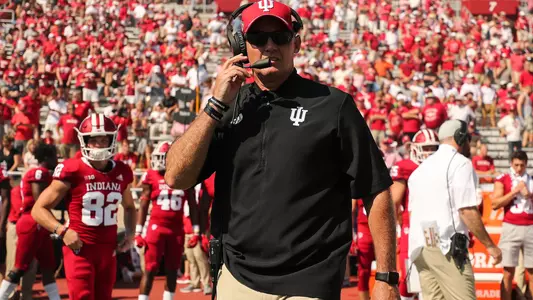
Tom Allen Zoom Press Conference Transcript & Video
7/14/2020 11:08:00 AM | Football
Head Coach Tom Allen
Opening Statement…
ALLEN: Good morning. Always good to be seen. This time of year, just getting ready for the season amidst all the other things we got going on. Tell you what. Just got done with our staff meeting and love being around our coaches. Our players now and getting them back has been really, really good. Brought all our coaches in last week. Following all the protocols for that within the school that we have set up. Just great being with our guys together and watching our guys workout. That's a super positive thing for sure and from a football perspective, excited that Tiawan Mullen is on the Bednarik Watch List. A guy that has worked extremely hard here, obviously played well as a freshman. Knows that just those types of things are a tribute to what he's put on the field so far. Doesn't mean a whole lot for the future but definitely special for him. His teammates are a big part of that and got a lot of hard work ahead of him. At the same time, proud of him and what he's done since he's been here. Once again, excited about our football team and how hard they're working right now and the work they're getting in with our strength staff. Ready to take some questions, if you have any, at this time.
Q: On how things are being dealt with during this uncertainty…
ALLEN: Good question. I think definitely it's July 14 and we still don't have a lot of questions answered. I think we thought that when this process was early in its stages that by this time, we would have a lot more answers but we don't, unfortunately. I will say you asked a lot of different things. To me, I'm optimistic about us starting our season. I am. I know that there's a lot of question marks still out there, but I believe that we will start our season. I believe we will start our season on time. I do and I feel like there will be challenges to be able to maintain the season without interruption. I think many people have commented and have many concerns about the possibility of interruptions. I don't think anybody really knows what they're going to look like, so I think you just do what we always do here. That is, you focus on what you know. Right now, we know that we're preparing our football team for the 2020 season. I know that the strength staff is working extremely hard. I'm very impressed with our strength staff and the job that they're doing with them and communicating with our players. Even now, we're still in Zoom mode with players. Yeah, we work out with them and their cohorts and they work out together in those smaller groups. We don't have meetings, yet, in person with our players. Even with our staff it's a control group and its partial Zoom and partial in person meetings when we have the group big enough that we can meet together in a large room in the team room, actually. The rest of them watch via Zoom. We may have to do those team meetings even that way when we get into fall camp. We're just trying to adapt and I think it's the progression you move through with your players. The cohorts continue to grow in size every two weeks. That's been a consistent progression. You have different obstacles along the way. You figure out how to handle those obstacles and you move forward. That to me is really what this is about. We've got tremendous medical professionals here on our campus. Dr. Rink is one of the best in the world at what he does. Dr. Hipskind is excellent. Their expertise that they provide to all of us has been at the top of the level of what you could expect from a Big Ten university. We rely on them. Talk to them consistently. They're helping us through and every progression you just do more and more. I know there's a national concern. I see everything just like everybody else does. I know the numbers and the direction they're going at this point. Isn't as positive as we'd like for it to be. We're continuing to take that information and with player safety and their well-being at the top of the priority list. It is going to be and it's not going to change no matter what. No matter how bad we want to play. And we are. Our players want to play. We all want to play. We're not going to put them at risk of something that would be a bad thing. That's where we got to trust in our leadership and we are. I feel good about that. I think it's just a progression. I know that there's probably answers that you wish you had and we don't have all of those at this point. We control what we can control. We don't blink. We don't get sidetracked on things we don't have any control over. We're also in a very responsible way preparing our football team for the 2020 season.
Q: On what you have heard from your assistants about player evaluations so far…
ALLEN: It's been constant communication with him (Kane Wommack) and his staff. As I stated before, I've been able to be at some of those as the head coach where other coaches were not. They're allowed to be this week so they've been there the first couple days. They've been very encouraged. I thought that as a collective group, I thought they did a good job of staying in good shape. It's never quite the same when you're not with your teammates. It's never quite the same when you don't have a coach right there with you pushing you and all those kinds of things. The things I've learned between week one and finishing that second week, two weeks with our staff, you notice a night and day difference. As a group we've had three different phases of groups come in. They've all been in different spots where they are. Overall, it was positive. Definitely you got some, I kind of explained it as the 10-80-10 principle. You probably have 10 percent that are training at an elite level, you have some of the team that is in good, solid shape and then you got a small group of guys that came back and had too many potato chips and soda. I feel like you had to get all those groups brought up. I think that's probably how it was. Unfortunately, for those small group of guys, they didn't take care of business and they obviously felt that early on. At the same time, I feel like I've been very encouraged. I think for me when the whole staff came back here and watched our groups work out yesterday and today, the consensus is first of all very impressed with our strength staff number one with the way they function and how detailed they are and how they do what they do is impressive. Number two as a collective group, they thought the guys looked good. They're working their tails off and that's why I'm so proud of them. Amidst all the question marks and the things we don't know, the one thing that I do know is that we got a football team that cares and a football team that has high expectations for the 2020 season and a whole bunch of guys that are really hungry to get back on the field and play at a high level. That's been encouraging and our strength staff is realistic about where we are. We know we got a lot more work ahead of us. They're definitely making good progress.
Q: On status of Peyton Hendershot…
ALLEN: He has completed his team-sanctioned discipline. He has completed the conduct process that we went through for the student conduct as a student-athlete of Indiana University. He completed that. He's closed his matter with the judicial system. We have a campus committee that determines when a student-athlete is reinstated to their team and to be able to be cleared and that is the case. He's been completely cleared and he is back with the team now fully as he completed all the things that he was asked to do.
Q: On players possibly deciding not to play this season…
ALLEN: That's a question that was brought up by one of our players and I don't know whether it is for me to necessarily say or just in general to ask about that but I know the Big Ten was clear on that. I support that. We talk openly and honestly in our program. Nobody in our program has come to me and said "Coach, that's what I want to do." They've asked how that would work if they did choose to do that. Bottom line is we want our athletes and their parents to feel 100 percent confident in them to be in a good situation. As we've always said I think from the beginning is you can't eliminate the risk completely. You can't eliminate the risk from playing football on a consistent basis without the virus. I want them to feel good about the protocols. This is kind of how I said it when we talked and we have a lot of open communication with the Big Ten. Here's the bottom line, you got to trust us and they do. They believe in us and I carry that burden of trust. We work really, really hard to build that trust with our parents and players in the recruiting process. Then once they get here, you are who you say you are. I think that trust is a big deal. It's a big part of our foundation of our program when you talk about the L-E-O concept. That's really caring for them more as a person than a player. That trust piece is big. We've had these conversations. I don't know that's a major question guys have had, but it's definitely something that is there. We'll keep an eye on that and we want them to feel very comfortable with what we're doing. We believe in the medical professionals that we have here at IU and not just the way they're leading here on our campus, but the whole Big Ten as I mentioned earlier. I think that's part of it. It gives them confidence. It gives me confidence. Even though we don't know everything about what the future holds, we have very, very high level of protocols that we're following right now and doing a good job of keeping guys in their cohorts that we have set up each and every two weeks as they grow. That's part of the process. I think that's all part of them feeling confident and comfortable with parents. They know they can reach out to me anytime. They have my cell number and a chance to reach out with any questions they have as well as our player development individuals. They're in contact with our parents. Assistant coaches in contact with them as well. Just being able to help them feel good about it and if they don't, there's things in place for them to be able to not be penalized.
Q: On keeping players as safe as possible…
ALLEN: It's a major focus and I think that's probably the biggest challenge we all face right now. Talking to other coaches and I don't care what level you're at, I think that as you mentioned the cohorts that's the word determined we used that we divided our team up into. They live with those cohorts. They run with those cohorts. Every two weeks those cohorts have gotten bigger. Eventually, once we get into fall camp those cohorts will basically be dissolved into a raw, we're going to practice together. You culminate to that point. We're not there yet. To your point, I've consistently said matter of fact every weekend there's reminders that go out. We always end each lift group with a challenge about social distancing, wearing your masks, staying away from parties, staying away from events that are large group gatherings indoors. That's the most dangerous type of environment we think to be in. We got a lot of people and you got to keep your mask on when you're within six feet of other people whether inside or outside. That's kind of how we deal with that. We follow that when we're here. When they're not here and we don't follow them home or hold their hand when they're there, but I'll tell you what, it's constant. Constant reminder. We've had some situations where we found out they weren't doing that and we had to get all over them. All you got to do is look on social media and see people still kind of refuse to follow it, which is frustrating and it's having more implications in certain parts of the country and numbers are reflecting that. I hope that they will listen and once again it's about being unselfish. It's about deciding I'm going to put my team in front of me and the desire to want to play this fall in front of my own personal desire to go out and quote-un-quote have a good time. You got to make some sacrifices. They can encourage them to stay together in their cohorts. Those are the guys they live with, run with and train with. They're with those guys so to stay within those groups as much as possible. When you can't help that, you stay social distanced and keep your mask on. It's a challenge we're trying to have with our guys and you just think when the students come back to us and school starts that will be an even greater challenge. It will continue to be a big point of emphasis and something we cannot just quit talking about.
Q: On how losing the non-conference games impact the season…
ALLEN: It is definitely different. You go through and those games have obviously given us a great opportunity. The way our schedule works here they're usually the first three games or three of the first four in the recent past. So those opportunities to get ready for conference play have been very, very important for us, so you won't have those now. I support the decision that the Big Ten made with that. I understand. We had discussions about it and leadership made that call. Bottom line is, once again it's about what's best for the players, their well-being and trying to create the best scenario possible for us to have a season, and the control that it gives us, with in protocols that we want to follow as a conference and understanding that those will be followed by the conference schools. And then the flexibility within the schedule that that gives us, to be able to have a situation where maybe two teams can't play so now you move that game to a different spot. Whereas with a normal 12-game season with non-conference games mixed in there, there's really no, outside that one bye week, you have no other options. I think the flexibility that it gives us is very important, and for so many unknowns that we have ahead of us I think that was a very positive thing to be able to do. It wasn't just football, this is all fall sports to go conference only. So, to give us that type of, what was best for our student-athletes in the Big Ten. I know our region stretches all the way for Nebraska to Rutgers. So, it's very, very broad, 11 different states are affected by the Big Ten Conference. It's a lot of area to cover. Just a lot of variables involved, tough decisions to be made for sure but it definitely makes it challenging. You're playing 10 Big Ten games in a season, which is pretty difficult to do. We play in a great conference, a lot of physical football teams, it's going to be hard for everybody. We'll all be in the same boat. Don't know how all the other conferences are going to respond. That really was not part of it. Basically, you have to decide what's best for the schools that you work with and you represent. Our leadership made that decision that I support 100 percent. We still don't know who we're going to play, the order we're going to play them in or how we we are going to play. Those are still to be determined. But when we find that out, obviously it's affected, you have these projects you work on for the upcoming opponent and right now several of those we're not going to be playing. So, we've just got to, don't blink.
Q: On how many players, coaches, staff have been tested, and how many have tested positive for COVID-19…
ALLEN: At this point all players that are on campus have been tested. We have 120 players right now that are on campus. All of our coaches have been tested. I'm not going to give out specifics, but I think they said the overall, we've had I think four for the whole athletic department. I think that's the accurate number. That's for everyone that's been tested, including all the sports on campus. It's not a very high number at all, but it's a constant challenge to keep healthy. Bottom line is that testing is an important piece for us right now, and the accuracy of it. We're trusting in that. They've done a great job with it and in the turnaround and everything that we do to keep our guys; if a guy starts having symptoms they'll get tested again. So just doing everything we can to keep our guys safe. We 've had a small number. There's four in all of athletics. So, within that number they're not all within our team. They're spread out.
Q: On the adjustments to your recruiting style in the midst of the pandemic…
ALLEN: Well it's unprecedented. I'm telling you, we're dealing with new challenges. We usually do such a tremendous job of getting so many guys on campus. We did a lot of that early on, which was good. Even over the summer and having the summer visits. The official visits over the summer have become really big for us as we recruit in the south quite a bit in getting those kids up here for an official visit. All of that has not happened. It's different. You're just trying to find creative ways to get an eyeball on guys. Sometimes you forget about the simple fact of being able to go a school and eyeball a kid in the spring time. We lost all those days. A kid is listed as 6'1, is he really 6'1? Usually they're not. Whatever they're listed as they're usually at least an inch shorter than that because of the natural, whether you're in your shoes or out of your shoes. We always want to know what they are in their bare feet. And body structure, frame, how much weight do we think he can gain. So those are probably the bigger things that you lose because it's a simple process you go through. It means a lot when you say hey, Coach so-and-so was in that school and he saw this kid working out in his weight class and got a chance to eyeball him. Much of that has not happened, especially the younger guys. So, we've got to be able to go through creative ways to do that. Even getting kids on campus. We can't meet them when they come so we have a way for them to come visit on their own, if they want to do a tour on their own, there's a legalized way to do a tour of Bloomington. Not go inside any buildings but at least see everything, and we've had a few players choose to do that, giving them a little map that they can follow ahead of time. Those are challenging situations for sure. You talk about the early signing period. They haven't made a decision on that yet. I think it's going to be difficult to have one, but who knows what they'll decide. They may decide to go that route. A lot of kids have committed to places they haven't been to. So, people have offered guys they haven't seen in person. We find ourselves in that situation as well. It's unique. I think it's going to create a very interesting finish, and I guess that's the part I'm focusing on because we can't change anything about what's happened. They're not going to be coming on to campus anytime soon, so the reality is how do we finish it out and hold on to the guys that have committed and convincing the guys that haven't been here yet to come for a visit to check us out before they make their final decision. Then be able to get a chance to see kids play. That's where if a kid doesn't have a senior season in certain states, that makes that very challenging. I think you're going to see the importance of senior evaluations is going to go way up because of the lack of camps and the lack of spring evaluations that we had. Then at the same time if you take that away, wow, I don't know. It makes it even more challenging. The big thing about recruiting is that you want to try to gain as much information as you can to make a decision, and that information right now is limited. I think it's going to cause people to make more mistakes in the process because you have less information to go off of. It is a smaller class for us, which is one positive thing because of the circumstances of having a small senior class. That's probably one positive in all this. I just think it makes for very difficult evaluation for the coaches and a very frustrating process for the players because they want to be seen and are not able to be. More than anything we've got to focus on what we can do, the information we do know and make the best decisions possible with that information.
Q: On if there is a lot of support to even the number of conference games…
ALLEN: When you starting thinking about how our conference operates, in the normal nine-game schedule logically one year you're going to have four home games in conference and the next year you're going to have five. This cycle it's time for the east to have five home games in the conference schedule that we already had set up, so that won't change. Then it makes sense if we do have a 10-game schedule, with all these things that are in play right now what's being discussed, to make it equal if we have that 10th game it would go, the west division would be host for that 10th game. We'd play somebody from that side. Those are things that you're trying to work through. Obviously, the home-game ticket sales are a big deal to be able to host a conference game, so I would imagine if you're going to have 10 games, you're going to have five and five. Don't know who that would be yet. Don't know how they would make that decision or who that 10th opponent would be. Those are all things that our conference leadership is discussing right now.
Q: On how he would deal with a positive case in season…
ALLEN: First of all, yes, the whole COVID situation has created a whole new look in how you evaluate your depth chart. I'll probably say this a lot moving forward, we've got to be three deep at every position. Before you wanted to work hard to get two guys that we felt confident playing at every spot. I think that has to expand to three. We've already discussed how we're going to practice and how we're going to prepare. The number of guys we're going to get ready to play has to grow and expand. Is it a true three deep where you have three individual guys at every position, you got some swing guys? I'm sure the swing guys is probably the first thing you would do, but boy you're going to have to have guys ready at every position, quarterback included. No doubt. We've talked about even keeping guys separated as much as we can. There's a point where you can't do that, but as much as you can so you don't get multiple guys getting sick from the same position group. That part is very, very important to protect. We've even had discussions as coaches. You've got to have a play caller. If something happens to Coach Sheridan who's calling the plays? If something happens to Coach Wommack who's calling the plays? If something happens to Coach Allen, who's running the team on game day? Those are conversations we're having. We will have a backup for every coach. Whatever your role is, everybody has to have someone ready to take their place if you can't go a certain week. There will be protocols in place, and those protocols are not totally set yet, exactly what that looks like. Right now, we have certain things that we're doing to really try and protect the whole group as we bring those groups back in this summer. What do the game week protocols look like, I think that's part of the control piece of having a conference-only schedule. The benefit of that is one of those components for sure. I'm still working through what that's going to look like. The medical professionals we're relying on heavily for that. The advice they're going to give us each and every week, and how we travel and all the different things we go through. Those are all important things. They're going to go into allowing us to maintain our season and finish it out. Bottom line is it's a reality that we have to deal with. And as far as Peyton Ramsey being at Northwestern, yeah it wasn't on the schedule initially and the only way for that to happen in the previous schedule was for both of us to win our division and play in the Big Ten championship game. So right now, another variable could come into play based on the new scheduling format. We'll take whatever comes our way. We really don't have any control over that. I appreciate our leadership. They've had us talk openly and honestly as coaches, and we have weekly meetings and we've had a lot of discussions but no final answers on any of that. But I do appreciate them and Kevin Warren's leadership of being able to keep us informed and keep us part of this process. He's done a great job of that.
Q: On if there has there been any discussion about letting coaching staffs backfill on game days if someone is out…
ALLEN: Exactly right. Right now, we're in discussion with our compliance in talking that through and finding out what they NCAA rule is going to be. I just give the example where you're going to lose your special teams coordinator. Say Kasey Teegardin gets sick and he can't be there on game day or game week prep. Can you move a GA up to a full-time spot to where he has those responsibilities? Who takes his place? You only have so many accountable coaches within the rules, and we have a lot of individuals on our staff that are very capable of being full-time coaches or on-field coaches as we call them. Their called accountable coaches by the rules of the NCAA, to move a guy into that spot. So that's what we're working now to get answers on. I'm hoping we have that flexibility. It would make common sense to have that as a one-year temporary exception because of the circumstances. Those are real life things that we have to deal with, and we've got to prepare for everything. The good news is that you will know ahead of time. It's not like it's going to be the night before the game situation, but at the same time you'd be able to have that fleshed out in advance. We're in the process of meeting with compliance and finding out what the NCAA is going to allow each school to do when the situation arises.
Closing statement…
ALLEN: Just want to encourage everybody to where their masks, socially distance and do everything that we can to help keep those around us safe and we'll be able to get to doing the things we love to do. Have a great day. LEO.
Opening Statement…
ALLEN: Good morning. Always good to be seen. This time of year, just getting ready for the season amidst all the other things we got going on. Tell you what. Just got done with our staff meeting and love being around our coaches. Our players now and getting them back has been really, really good. Brought all our coaches in last week. Following all the protocols for that within the school that we have set up. Just great being with our guys together and watching our guys workout. That's a super positive thing for sure and from a football perspective, excited that Tiawan Mullen is on the Bednarik Watch List. A guy that has worked extremely hard here, obviously played well as a freshman. Knows that just those types of things are a tribute to what he's put on the field so far. Doesn't mean a whole lot for the future but definitely special for him. His teammates are a big part of that and got a lot of hard work ahead of him. At the same time, proud of him and what he's done since he's been here. Once again, excited about our football team and how hard they're working right now and the work they're getting in with our strength staff. Ready to take some questions, if you have any, at this time.
Q: On how things are being dealt with during this uncertainty…
ALLEN: Good question. I think definitely it's July 14 and we still don't have a lot of questions answered. I think we thought that when this process was early in its stages that by this time, we would have a lot more answers but we don't, unfortunately. I will say you asked a lot of different things. To me, I'm optimistic about us starting our season. I am. I know that there's a lot of question marks still out there, but I believe that we will start our season. I believe we will start our season on time. I do and I feel like there will be challenges to be able to maintain the season without interruption. I think many people have commented and have many concerns about the possibility of interruptions. I don't think anybody really knows what they're going to look like, so I think you just do what we always do here. That is, you focus on what you know. Right now, we know that we're preparing our football team for the 2020 season. I know that the strength staff is working extremely hard. I'm very impressed with our strength staff and the job that they're doing with them and communicating with our players. Even now, we're still in Zoom mode with players. Yeah, we work out with them and their cohorts and they work out together in those smaller groups. We don't have meetings, yet, in person with our players. Even with our staff it's a control group and its partial Zoom and partial in person meetings when we have the group big enough that we can meet together in a large room in the team room, actually. The rest of them watch via Zoom. We may have to do those team meetings even that way when we get into fall camp. We're just trying to adapt and I think it's the progression you move through with your players. The cohorts continue to grow in size every two weeks. That's been a consistent progression. You have different obstacles along the way. You figure out how to handle those obstacles and you move forward. That to me is really what this is about. We've got tremendous medical professionals here on our campus. Dr. Rink is one of the best in the world at what he does. Dr. Hipskind is excellent. Their expertise that they provide to all of us has been at the top of the level of what you could expect from a Big Ten university. We rely on them. Talk to them consistently. They're helping us through and every progression you just do more and more. I know there's a national concern. I see everything just like everybody else does. I know the numbers and the direction they're going at this point. Isn't as positive as we'd like for it to be. We're continuing to take that information and with player safety and their well-being at the top of the priority list. It is going to be and it's not going to change no matter what. No matter how bad we want to play. And we are. Our players want to play. We all want to play. We're not going to put them at risk of something that would be a bad thing. That's where we got to trust in our leadership and we are. I feel good about that. I think it's just a progression. I know that there's probably answers that you wish you had and we don't have all of those at this point. We control what we can control. We don't blink. We don't get sidetracked on things we don't have any control over. We're also in a very responsible way preparing our football team for the 2020 season.
Q: On what you have heard from your assistants about player evaluations so far…
ALLEN: It's been constant communication with him (Kane Wommack) and his staff. As I stated before, I've been able to be at some of those as the head coach where other coaches were not. They're allowed to be this week so they've been there the first couple days. They've been very encouraged. I thought that as a collective group, I thought they did a good job of staying in good shape. It's never quite the same when you're not with your teammates. It's never quite the same when you don't have a coach right there with you pushing you and all those kinds of things. The things I've learned between week one and finishing that second week, two weeks with our staff, you notice a night and day difference. As a group we've had three different phases of groups come in. They've all been in different spots where they are. Overall, it was positive. Definitely you got some, I kind of explained it as the 10-80-10 principle. You probably have 10 percent that are training at an elite level, you have some of the team that is in good, solid shape and then you got a small group of guys that came back and had too many potato chips and soda. I feel like you had to get all those groups brought up. I think that's probably how it was. Unfortunately, for those small group of guys, they didn't take care of business and they obviously felt that early on. At the same time, I feel like I've been very encouraged. I think for me when the whole staff came back here and watched our groups work out yesterday and today, the consensus is first of all very impressed with our strength staff number one with the way they function and how detailed they are and how they do what they do is impressive. Number two as a collective group, they thought the guys looked good. They're working their tails off and that's why I'm so proud of them. Amidst all the question marks and the things we don't know, the one thing that I do know is that we got a football team that cares and a football team that has high expectations for the 2020 season and a whole bunch of guys that are really hungry to get back on the field and play at a high level. That's been encouraging and our strength staff is realistic about where we are. We know we got a lot more work ahead of us. They're definitely making good progress.
Q: On status of Peyton Hendershot…
ALLEN: He has completed his team-sanctioned discipline. He has completed the conduct process that we went through for the student conduct as a student-athlete of Indiana University. He completed that. He's closed his matter with the judicial system. We have a campus committee that determines when a student-athlete is reinstated to their team and to be able to be cleared and that is the case. He's been completely cleared and he is back with the team now fully as he completed all the things that he was asked to do.
Q: On players possibly deciding not to play this season…
ALLEN: That's a question that was brought up by one of our players and I don't know whether it is for me to necessarily say or just in general to ask about that but I know the Big Ten was clear on that. I support that. We talk openly and honestly in our program. Nobody in our program has come to me and said "Coach, that's what I want to do." They've asked how that would work if they did choose to do that. Bottom line is we want our athletes and their parents to feel 100 percent confident in them to be in a good situation. As we've always said I think from the beginning is you can't eliminate the risk completely. You can't eliminate the risk from playing football on a consistent basis without the virus. I want them to feel good about the protocols. This is kind of how I said it when we talked and we have a lot of open communication with the Big Ten. Here's the bottom line, you got to trust us and they do. They believe in us and I carry that burden of trust. We work really, really hard to build that trust with our parents and players in the recruiting process. Then once they get here, you are who you say you are. I think that trust is a big deal. It's a big part of our foundation of our program when you talk about the L-E-O concept. That's really caring for them more as a person than a player. That trust piece is big. We've had these conversations. I don't know that's a major question guys have had, but it's definitely something that is there. We'll keep an eye on that and we want them to feel very comfortable with what we're doing. We believe in the medical professionals that we have here at IU and not just the way they're leading here on our campus, but the whole Big Ten as I mentioned earlier. I think that's part of it. It gives them confidence. It gives me confidence. Even though we don't know everything about what the future holds, we have very, very high level of protocols that we're following right now and doing a good job of keeping guys in their cohorts that we have set up each and every two weeks as they grow. That's part of the process. I think that's all part of them feeling confident and comfortable with parents. They know they can reach out to me anytime. They have my cell number and a chance to reach out with any questions they have as well as our player development individuals. They're in contact with our parents. Assistant coaches in contact with them as well. Just being able to help them feel good about it and if they don't, there's things in place for them to be able to not be penalized.
Q: On keeping players as safe as possible…
ALLEN: It's a major focus and I think that's probably the biggest challenge we all face right now. Talking to other coaches and I don't care what level you're at, I think that as you mentioned the cohorts that's the word determined we used that we divided our team up into. They live with those cohorts. They run with those cohorts. Every two weeks those cohorts have gotten bigger. Eventually, once we get into fall camp those cohorts will basically be dissolved into a raw, we're going to practice together. You culminate to that point. We're not there yet. To your point, I've consistently said matter of fact every weekend there's reminders that go out. We always end each lift group with a challenge about social distancing, wearing your masks, staying away from parties, staying away from events that are large group gatherings indoors. That's the most dangerous type of environment we think to be in. We got a lot of people and you got to keep your mask on when you're within six feet of other people whether inside or outside. That's kind of how we deal with that. We follow that when we're here. When they're not here and we don't follow them home or hold their hand when they're there, but I'll tell you what, it's constant. Constant reminder. We've had some situations where we found out they weren't doing that and we had to get all over them. All you got to do is look on social media and see people still kind of refuse to follow it, which is frustrating and it's having more implications in certain parts of the country and numbers are reflecting that. I hope that they will listen and once again it's about being unselfish. It's about deciding I'm going to put my team in front of me and the desire to want to play this fall in front of my own personal desire to go out and quote-un-quote have a good time. You got to make some sacrifices. They can encourage them to stay together in their cohorts. Those are the guys they live with, run with and train with. They're with those guys so to stay within those groups as much as possible. When you can't help that, you stay social distanced and keep your mask on. It's a challenge we're trying to have with our guys and you just think when the students come back to us and school starts that will be an even greater challenge. It will continue to be a big point of emphasis and something we cannot just quit talking about.
Q: On how losing the non-conference games impact the season…
ALLEN: It is definitely different. You go through and those games have obviously given us a great opportunity. The way our schedule works here they're usually the first three games or three of the first four in the recent past. So those opportunities to get ready for conference play have been very, very important for us, so you won't have those now. I support the decision that the Big Ten made with that. I understand. We had discussions about it and leadership made that call. Bottom line is, once again it's about what's best for the players, their well-being and trying to create the best scenario possible for us to have a season, and the control that it gives us, with in protocols that we want to follow as a conference and understanding that those will be followed by the conference schools. And then the flexibility within the schedule that that gives us, to be able to have a situation where maybe two teams can't play so now you move that game to a different spot. Whereas with a normal 12-game season with non-conference games mixed in there, there's really no, outside that one bye week, you have no other options. I think the flexibility that it gives us is very important, and for so many unknowns that we have ahead of us I think that was a very positive thing to be able to do. It wasn't just football, this is all fall sports to go conference only. So, to give us that type of, what was best for our student-athletes in the Big Ten. I know our region stretches all the way for Nebraska to Rutgers. So, it's very, very broad, 11 different states are affected by the Big Ten Conference. It's a lot of area to cover. Just a lot of variables involved, tough decisions to be made for sure but it definitely makes it challenging. You're playing 10 Big Ten games in a season, which is pretty difficult to do. We play in a great conference, a lot of physical football teams, it's going to be hard for everybody. We'll all be in the same boat. Don't know how all the other conferences are going to respond. That really was not part of it. Basically, you have to decide what's best for the schools that you work with and you represent. Our leadership made that decision that I support 100 percent. We still don't know who we're going to play, the order we're going to play them in or how we we are going to play. Those are still to be determined. But when we find that out, obviously it's affected, you have these projects you work on for the upcoming opponent and right now several of those we're not going to be playing. So, we've just got to, don't blink.
Q: On how many players, coaches, staff have been tested, and how many have tested positive for COVID-19…
ALLEN: At this point all players that are on campus have been tested. We have 120 players right now that are on campus. All of our coaches have been tested. I'm not going to give out specifics, but I think they said the overall, we've had I think four for the whole athletic department. I think that's the accurate number. That's for everyone that's been tested, including all the sports on campus. It's not a very high number at all, but it's a constant challenge to keep healthy. Bottom line is that testing is an important piece for us right now, and the accuracy of it. We're trusting in that. They've done a great job with it and in the turnaround and everything that we do to keep our guys; if a guy starts having symptoms they'll get tested again. So just doing everything we can to keep our guys safe. We 've had a small number. There's four in all of athletics. So, within that number they're not all within our team. They're spread out.
Q: On the adjustments to your recruiting style in the midst of the pandemic…
ALLEN: Well it's unprecedented. I'm telling you, we're dealing with new challenges. We usually do such a tremendous job of getting so many guys on campus. We did a lot of that early on, which was good. Even over the summer and having the summer visits. The official visits over the summer have become really big for us as we recruit in the south quite a bit in getting those kids up here for an official visit. All of that has not happened. It's different. You're just trying to find creative ways to get an eyeball on guys. Sometimes you forget about the simple fact of being able to go a school and eyeball a kid in the spring time. We lost all those days. A kid is listed as 6'1, is he really 6'1? Usually they're not. Whatever they're listed as they're usually at least an inch shorter than that because of the natural, whether you're in your shoes or out of your shoes. We always want to know what they are in their bare feet. And body structure, frame, how much weight do we think he can gain. So those are probably the bigger things that you lose because it's a simple process you go through. It means a lot when you say hey, Coach so-and-so was in that school and he saw this kid working out in his weight class and got a chance to eyeball him. Much of that has not happened, especially the younger guys. So, we've got to be able to go through creative ways to do that. Even getting kids on campus. We can't meet them when they come so we have a way for them to come visit on their own, if they want to do a tour on their own, there's a legalized way to do a tour of Bloomington. Not go inside any buildings but at least see everything, and we've had a few players choose to do that, giving them a little map that they can follow ahead of time. Those are challenging situations for sure. You talk about the early signing period. They haven't made a decision on that yet. I think it's going to be difficult to have one, but who knows what they'll decide. They may decide to go that route. A lot of kids have committed to places they haven't been to. So, people have offered guys they haven't seen in person. We find ourselves in that situation as well. It's unique. I think it's going to create a very interesting finish, and I guess that's the part I'm focusing on because we can't change anything about what's happened. They're not going to be coming on to campus anytime soon, so the reality is how do we finish it out and hold on to the guys that have committed and convincing the guys that haven't been here yet to come for a visit to check us out before they make their final decision. Then be able to get a chance to see kids play. That's where if a kid doesn't have a senior season in certain states, that makes that very challenging. I think you're going to see the importance of senior evaluations is going to go way up because of the lack of camps and the lack of spring evaluations that we had. Then at the same time if you take that away, wow, I don't know. It makes it even more challenging. The big thing about recruiting is that you want to try to gain as much information as you can to make a decision, and that information right now is limited. I think it's going to cause people to make more mistakes in the process because you have less information to go off of. It is a smaller class for us, which is one positive thing because of the circumstances of having a small senior class. That's probably one positive in all this. I just think it makes for very difficult evaluation for the coaches and a very frustrating process for the players because they want to be seen and are not able to be. More than anything we've got to focus on what we can do, the information we do know and make the best decisions possible with that information.
Q: On if there is a lot of support to even the number of conference games…
ALLEN: When you starting thinking about how our conference operates, in the normal nine-game schedule logically one year you're going to have four home games in conference and the next year you're going to have five. This cycle it's time for the east to have five home games in the conference schedule that we already had set up, so that won't change. Then it makes sense if we do have a 10-game schedule, with all these things that are in play right now what's being discussed, to make it equal if we have that 10th game it would go, the west division would be host for that 10th game. We'd play somebody from that side. Those are things that you're trying to work through. Obviously, the home-game ticket sales are a big deal to be able to host a conference game, so I would imagine if you're going to have 10 games, you're going to have five and five. Don't know who that would be yet. Don't know how they would make that decision or who that 10th opponent would be. Those are all things that our conference leadership is discussing right now.
Q: On how he would deal with a positive case in season…
ALLEN: First of all, yes, the whole COVID situation has created a whole new look in how you evaluate your depth chart. I'll probably say this a lot moving forward, we've got to be three deep at every position. Before you wanted to work hard to get two guys that we felt confident playing at every spot. I think that has to expand to three. We've already discussed how we're going to practice and how we're going to prepare. The number of guys we're going to get ready to play has to grow and expand. Is it a true three deep where you have three individual guys at every position, you got some swing guys? I'm sure the swing guys is probably the first thing you would do, but boy you're going to have to have guys ready at every position, quarterback included. No doubt. We've talked about even keeping guys separated as much as we can. There's a point where you can't do that, but as much as you can so you don't get multiple guys getting sick from the same position group. That part is very, very important to protect. We've even had discussions as coaches. You've got to have a play caller. If something happens to Coach Sheridan who's calling the plays? If something happens to Coach Wommack who's calling the plays? If something happens to Coach Allen, who's running the team on game day? Those are conversations we're having. We will have a backup for every coach. Whatever your role is, everybody has to have someone ready to take their place if you can't go a certain week. There will be protocols in place, and those protocols are not totally set yet, exactly what that looks like. Right now, we have certain things that we're doing to really try and protect the whole group as we bring those groups back in this summer. What do the game week protocols look like, I think that's part of the control piece of having a conference-only schedule. The benefit of that is one of those components for sure. I'm still working through what that's going to look like. The medical professionals we're relying on heavily for that. The advice they're going to give us each and every week, and how we travel and all the different things we go through. Those are all important things. They're going to go into allowing us to maintain our season and finish it out. Bottom line is it's a reality that we have to deal with. And as far as Peyton Ramsey being at Northwestern, yeah it wasn't on the schedule initially and the only way for that to happen in the previous schedule was for both of us to win our division and play in the Big Ten championship game. So right now, another variable could come into play based on the new scheduling format. We'll take whatever comes our way. We really don't have any control over that. I appreciate our leadership. They've had us talk openly and honestly as coaches, and we have weekly meetings and we've had a lot of discussions but no final answers on any of that. But I do appreciate them and Kevin Warren's leadership of being able to keep us informed and keep us part of this process. He's done a great job of that.
Q: On if there has there been any discussion about letting coaching staffs backfill on game days if someone is out…
ALLEN: Exactly right. Right now, we're in discussion with our compliance in talking that through and finding out what they NCAA rule is going to be. I just give the example where you're going to lose your special teams coordinator. Say Kasey Teegardin gets sick and he can't be there on game day or game week prep. Can you move a GA up to a full-time spot to where he has those responsibilities? Who takes his place? You only have so many accountable coaches within the rules, and we have a lot of individuals on our staff that are very capable of being full-time coaches or on-field coaches as we call them. Their called accountable coaches by the rules of the NCAA, to move a guy into that spot. So that's what we're working now to get answers on. I'm hoping we have that flexibility. It would make common sense to have that as a one-year temporary exception because of the circumstances. Those are real life things that we have to deal with, and we've got to prepare for everything. The good news is that you will know ahead of time. It's not like it's going to be the night before the game situation, but at the same time you'd be able to have that fleshed out in advance. We're in the process of meeting with compliance and finding out what the NCAA is going to allow each school to do when the situation arises.
Closing statement…
ALLEN: Just want to encourage everybody to where their masks, socially distance and do everything that we can to help keep those around us safe and we'll be able to get to doing the things we love to do. Have a great day. LEO.


Players Mentioned

Thursday, June 11
Thursday, June 11
Wednesday, June 10
Wednesday, June 03