

Surging Indiana Building for Long-Term Success
Pete DiPrimio | IUHoosiers.com
BLOOMINGTON, Ind. -- Winning involves sacrifice. Every great team -- and you’d better believe Indiana is building toward baseball greatness -- understands that.
Sacrificing individual glory for group success can produce both if the talent, effort and determination are there.
The surging Hoosiers (31-11) have all of that.
Consider Bobby Whalen. The junior center fielder has batted in multiple spots this season, and is now No. 2 in the lineup. He’s hitting .289 with 38 runs scored and 25 runs batted in.
“I do whatever is on that lineup card,” he says. “Right now, that’s the 2 spot. It could be the 9 spot. It could be anywhere. I do what helps the team.”
Consider Craig Yoho, once a banged-up infielder, now a successful senior pitcher with a 4-1 record, a 2.31 earned run average and 41 strikeouts in 23.1 innings.
“Last year he was an infielder coming off knee surgery,” head coach Jeff Mercer says, “and now we’re watching him become such a wonderful bullpen arm.”
Welcome to the anatomy of a Big Ten contender.
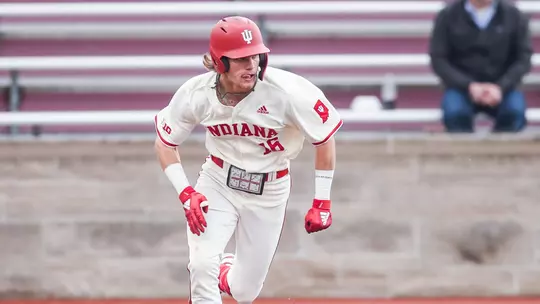
After a 5-6 start due to a strong early schedule that included trips to Auburn, Texas and North Carolina, the Hoosiers have gone 25-5 and surged to the top of the Big Ten standings. They lead the conference with a 9-3 record, ahead of Michigan (9-6), Maryland (8-4) and Nebraska (7-5). They will host Maryland, the defending Big Ten champs, for a three-game weekend series starting Friday at Bart Kaufman Field.
“We’re built to be gritty, to be blue-collar team,” freshman pitcher Ethan Phillips says. “We’re never out of it.”
It’s a big turnaround from last season’s reloading effort that produced a 10-14 conference record and plenty of hard lessons.
“We’ve recruited hard and have talented players,” Mercer says. “Those guys are great kids. They work hard. We have great coaches.”
Mercer came to IU in 2019 to win championships, emphasis on the plural. He won a Big Ten title in his first season thanks to prodigious team power (a program-record 95 home runs) -- and prodigious strikeouts (a program-record 650). The Hoosiers swung big, and often missed big. That was enough to win a regular season title, but not to deliver postseason success.
In the following seasons, as graduation and the Major League Baseball draft depleted the roster, Mercer and his staff recruited talent that was more than just power. Speed, contact, technique and execution were the foundation, with a heavy dose of high school talent combined with selective college transfers.
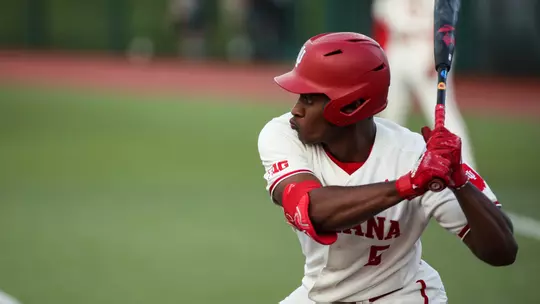
“To compete at a national level,” Mercer says, “you have to play consistently and have a high on-base percentage. You can’t go to the Big Ten tournament and that College World Series massive ballpark (Omaha’s Charles Schwab Field) and launch homers. That won’t work against elite arms while striking out 16 times a game.
“We have to be a more contact-oriented group. We have to run to go from first to third. Advance bases. On base percentage is king. The kids have bought into that.”
Buy-in hasn’t limited the Hoosiers’ scoring potential. Their 323 runs scored rank second in the Big Ten to Maryland’s 331. In the last two weeks, they’ve scored 18 against Illinois, 17 against Ohio, 16 against Ball State and 11 against Cincinnati.
“I have the utmost confidence in our offense at all times,” freshman pitcher Ethan Phillips says. “We can go into the last inning down a lot and everyone in the dugout has confidence we can come back. We’ve done it time and time again. We’re all good. We all want to win.”
IU is fourth in team batting average in the Big Ten, at .304 (Nebraska leads at .310). The Hoosiers’ 44 home runs rank fourth (Maryland leads with 73).
Pitching also has thrived. IU ranks fourth in the conference in earned run average, at .4.58, and second in strikeouts, at 389. Iowa leads in ERA (4.32) and strikeouts (405).
Last year’s emphasis was on youthful hitters. Yhe reward came with guys such as then freshmen Carter Mathison, Josh Pyne and Brock Tibbitts, who each drove in at least 40 runs, with Mathison slugging 19 home runs, and if it came with growing pains (IU struggled to a 27-32 overall record, Mercer’s first losing season as a head coach), the long-term benefits are showing now.
“Last year, we cleared the deck, got out of the way and let those guys play, knowing they’re talented,” Mercer says.
“Last year was hard, but it’s part of the plan. I don’t want to lose games, but if you don’t build from a foundation, if you’re not tough enough to do it the right way, if you don’t have thick enough skin to handle people calling you an idiot, then you’re not tough enough to succeed at a national level.”
Now, IU’s focus is on young pitchers with Phillips and fellow freshmen Connor Foley, Evan Whiteaker, Cooper Katskee, Ayden Decker-Petty and Brayden Risedorph. They’re a combined 10-1 with three saves.

“We have a bright future,” Phillips says. “Last year they went through it with the hitters. This is our round through.
“We’ve got great arms. It’s crazy talent. You wonder how did these guys not get drafted?
“We see we have the ability to be special. We enjoy being on the field together, in the pen together. It helps us build confidence. We all play a role to help this team win.”
This vindicates Mercer’s high-school recruiting emphasis.
“You can tie your money up for the next few years in junior college guys and suffocate your young players,” he says, “or recruit all the best high school players you can.
“Once those young guys get to campus, you get out of the way and let them play. It’s how every Big Ten team that has had high level success has done it for 50 years.
“You have to be a problem solver. We recruit nationally because of our brand. We recruit the best high school players across the country, invest in player development.”
Could a Big Ten title and a deep postseason run be the result?
“Who knows what happens the rest of the season,” Mercer says. “These kids are talented, work hard and have been coached well. They’re capable of competing at a high level.”